 +1 302-235-9792
 SIGN IN
 CONTACT US


- News
- Bispecific Antibody Design and Engineering: A Practical Framework for Discovery Research
share


Bispecific Antibody Design and Engineering: A Practical Framework for Discovery Research
Content Menu
● What Is a Bispecific Antibody?
● Why Bispecific Antibodies Matter in Modern Research
>> Key Research Advantages
● Core Mechanisms of Bispecific Antibodies
>> T-Cell Redirection
>> Dual Signaling-Pathway Blockade
>> Dual-Antigen Targeting
>> Receptor Clustering or Agonism Research
● Choosing the Right Bispecific Antibody Format
>> IgG-Like Bispecific Antibodies
>> Fragment-Based Bispecific Antibodies
>> A Practical Format-Selection Matrix
● A Step-by-Step Bispecific Antibody Design Workflow
>> 1. Define the Biological Hypothesis
>> 2. Select Target Pairs Carefully
>> 3. Choose Binding Domains and Epitope Pairs
>> 4. Select a Molecular Architecture
>> 5. Build and Express a Focused Construct Panel
>> 6. Characterize Molecular Properties
>> 7. Conduct Functional and Comparative Studies
● Critical Developability-Oriented Assessment Considerations
>> Chain Pairing and Mispairing
>> Stability and Aggregation
>> Affinity, Avidity, and Functional Balance
>> Fc Function and Fc Engineering
● Common Bispecific Antibody Design Mistakes
>> 1: Selecting Targets Without a Clear Mechanistic Link
>> 2: Using Only One Molecular Format
>> 3: Measuring Binding but Not Simultaneous Engagement
>> 4: Ignoring Target Density
>> 5: Treating Aggregates as a Minor Issue
● How Gene Universal Supports Bispecific Antibody Discovery
>> Our Research Support Capabilities
>> What Gene Universal Does Not Provide
● Start a Custom Bispecific Antibody Project
● Frequently Asked Questions
>> 1. What is the difference between a bispecific antibody and a monoclonal antibody?
>> 2. Which bispecific antibody format is best?
>> 3. Can bispecific antibodies be used for T-cell engager research?
>> 4. Why is chain mispairing important in bispecific antibody engineering?
>> 5. What research-stage tests are useful for a bispecific antibody?
>> 6. Can Gene Universal provide GMP, CDMO, or IND submission support?
● References
Bispecific antibodies are reshaping how researchers approach complex biological questions because a single engineered molecule can recognize two distinct targets or epitopes. For discovery teams investigating oncology, immunology, inflammation, infectious disease, or targeted delivery, bispecific antibody design can help test biological hypotheses that conventional monospecific antibodies may not address efficiently.
At Gene Universal, we support global research teams with custom antibody development and engineering services spanning DNA/RNA, recombinant protein, antibody discovery, antibody engineering, expression, purification, and characterization. Our role is to provide fit-for-purpose research-grade materials and technical support for early discovery and characterization. We do not provide GMP manufacturing, CDMO services, or IND submission support.
What Is a Bispecific Antibody?
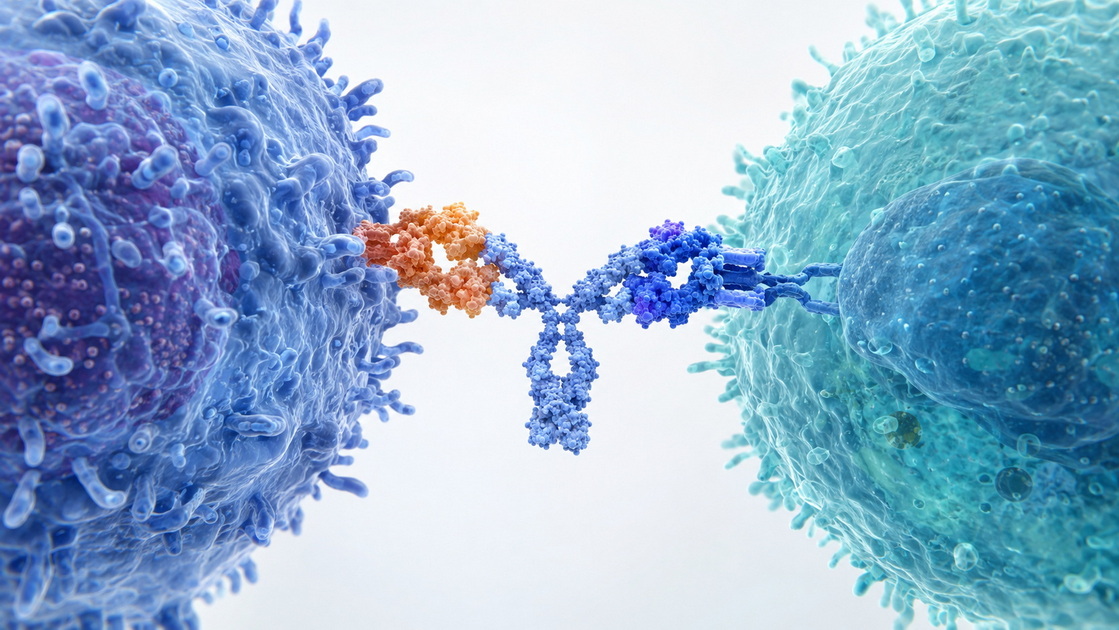
A bispecific antibody, often abbreviated as bsAb, is an engineered antibody-based molecule designed to bind two different antigens, two distinct epitopes on one antigen, or an antigen together with an immune-cell receptor.
Traditional monoclonal antibodies generally recognize one target. In contrast, bispecific antibodies can bring two biological components into close proximity, block two pathways at once, or increase functional selectivity through dual recognition.
This dual-binding capability creates several useful research opportunities:
- Cell bridging: Connecting an immune cell with a target cell.
- Dual-pathway blockade: Interfering with two disease-relevant signaling interactions.
- Conditional targeting: Favoring activity where two markers are present together.
- Targeted delivery research: Directing a molecule toward a cell-surface target while engaging another functional receptor.
- Mechanistic validation: Testing whether two pathways act independently, redundantly, or synergistically.
For example, a T-cell-engaging bispecific antibody may bind a tumor-associated antigen with one binding domain and CD3 on T cells with another. This format can be used to study immune-cell recruitment, target-cell recognition, cytokine signaling, and target-dependent cytotoxicity in appropriate research systems.
Why Bispecific Antibodies Matter in Modern Research
Many diseases involve more than one molecular driver. A single signaling pathway may be compensated for by another pathway, while disease cells may vary substantially across different tissues, patients, or experimental models.
Bispecific antibody engineering offers a way to explore these more complicated biological systems with one molecular construct.
Key Research Advantages
| Research objective | How a bispecific antibody may help |
|---|---|
| Study two targets together | Enables simultaneous engagement of two antigens or epitopes |
| Explore pathway cooperation | Helps assess whether dual targeting produces additive or synergistic effects |
| Investigate cell-cell interactions | Can bring immune cells, target cells, or accessory cells into controlled proximity |
| Improve target selectivity hypotheses | Can be designed to recognize a target combination rather than one marker alone |
| Compare molecular formats | Allows side-by-side evaluation of Fc-containing and fragment-based architectures |
| Generate discovery data | Supports binding, specificity, stability, expression, and functional screening studies |
Bispecific formats are not interchangeable. Molecular geometry, valency, domain orientation, linker length, Fc activity, binding affinity, and target density can all affect experimental behavior. A construct that performs well in one assay may show very different characteristics in another assay format.
That is why the most productive programs begin with a clearly stated biological question rather than choosing a format first.
Core Mechanisms of Bispecific Antibodies
Bispecific antibodies can work through several distinct mechanisms. The best approach depends on target biology, disease context, cell type, assay model, and the intended experimental readout.
T-Cell Redirection
A common bispecific antibody strategy is to connect a target-cell antigen with CD3 on T cells. By physically bringing T cells close to target cells, the molecule can support investigation of immune synapse formation, T-cell activation, target-cell killing, cytokine release, and antigen-density dependence.
Researchers often evaluate:
- Target binding on relevant cell lines or primary cells
- CD3 binding characteristics
- Target-dependent T-cell activation
- Cytotoxicity across a range of effector-to-target ratios
- Cytokine release profiles
- Activity in target-positive versus target-negative controls
The relationship between affinity and activity is not always linear. Very high affinity to one target may not necessarily generate the preferred functional response in every experimental context. Spatial orientation, epitope location, target abundance, and molecular flexibility can be equally important.
Dual Signaling-Pathway Blockade
Some bispecific antibodies are designed to block two ligand-receptor interactions or two receptor-mediated pathways. This strategy may be useful when pathway redundancy contributes to disease biology.
For example, a dual-targeting molecule may help researchers investigate whether blocking two receptor systems produces a different response from blocking either receptor alone. Comparative experiments can include single antibodies, antibody combinations, and the bispecific construct itself.
The purpose of these studies is not simply to identify the strongest signal. It is to understand why the signal changes and whether the result depends on target co-expression, receptor proximity, pathway feedback, or differences in cellular uptake.
Dual-Antigen Targeting
A bispecific antibody can also recognize two markers on the same cell or within the same tissue environment. This may support research into selective binding, avidity effects, and cell-population discrimination.
When two targets are present on the same cell, dual engagement may increase local binding strength through avidity. However, this outcome depends on several variables:
- Distance between the two epitopes
- Relative density of each antigen
- Binding-arm orientation
- Antibody format and flexibility
- Binding kinetics
- Internalization behavior
Receptor Clustering or Agonism Research
Some bispecific designs are created to bring receptors together or to position a receptor near a co-stimulatory molecule. These approaches can be relevant to research involving immune modulation, receptor activation, or signaling control.
Because receptor clustering can be sensitive to molecular geometry, format selection becomes especially important. Small changes in valency or domain positioning may substantially alter the biological result.
Choosing the Right Bispecific Antibody Format
There is no universal "best" bispecific antibody format. Different architectures create different trade-offs among molecular size, half-life-related properties, valency, expression behavior, stability, and functional geometry.
A thoughtful format decision should connect directly to the research hypothesis.
IgG-Like Bispecific Antibodies
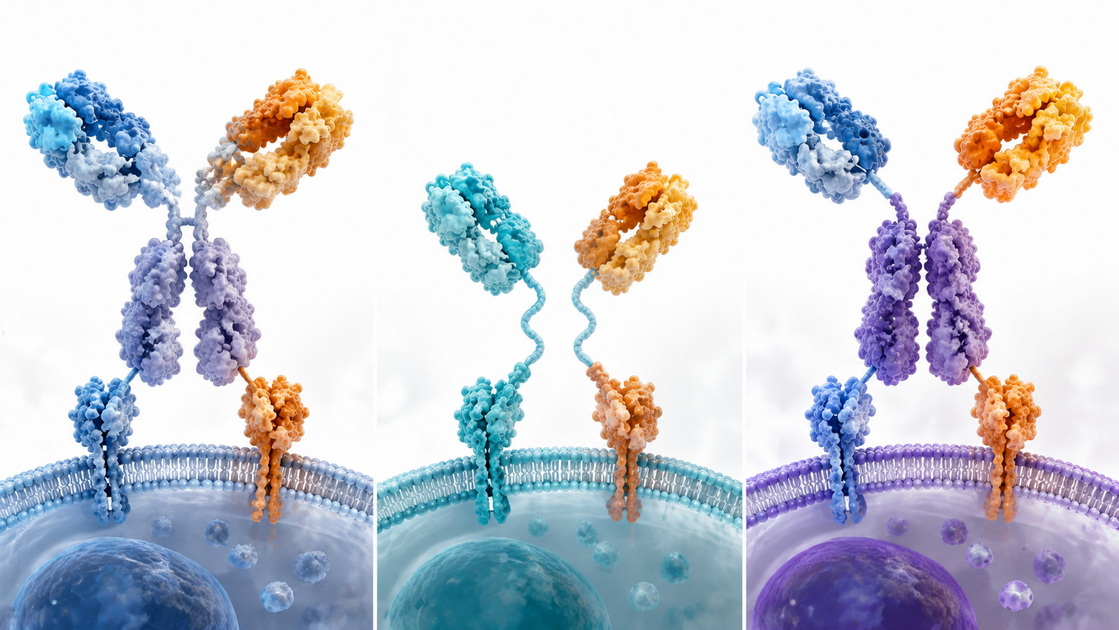
IgG-like bispecific antibodies preserve much of the general architecture of a conventional immunoglobulin G molecule. They often include an Fc region and may use engineering strategies to encourage correct heavy-chain and light-chain pairing.
Potential advantages include:
- Familiar antibody-like architecture
- Fc-mediated functional options
- Potentially favorable molecular stability
- Flexible choices for monovalent or bivalent target engagement
- Compatibility with many standard antibody characterization workflows
Common engineering approaches include heterodimeric Fc design, common light-chain strategies, CrossMab-style domain exchange, and other chain-pairing solutions.
However, IgG-like designs can introduce chain-association challenges. Incorrectly paired chains, homodimers, fragments, aggregates, and other variant species may complicate research expression and characterization.
Fragment-Based Bispecific Antibodies
Fragment-based formats may use scFv, Fab, diabody, tandem scFv, or related assemblies. These molecules can be smaller and may be useful where compact structure or a specific binding geometry is important.
Potential advantages include:
- Compact molecular designs
- Flexible domain arrangement
- Rapid format prototyping
- Potentially useful tissue-penetration research models
- Ability to tune valency and binding orientation
Potential challenges include:
- Lower intrinsic stability for some constructs
- Aggregation risk
- Proteolytic sensitivity
- Variable expression yields
- Lack of Fc-related properties unless an Fc is intentionally added
A Practical Format-Selection Matrix
| Design question | Potentially relevant format feature |
|---|---|
| Do you need an Fc region? | Consider an IgG-like or Fc-fusion architecture |
| Is compact size important for the experiment? | Consider fragment-based constructs |
| Do both targets require equal valency? | Compare 1+1, 2+1, 2+2, or asymmetric arrangements |
| Is receptor proximity central to the mechanism? | Evaluate domain orientation, linker design, and molecular geometry |
| Could chain mispairing be a concern? | Consider common light chains, engineered pairing strategies, or single-chain designs |
| Do you need multiple format comparisons? | Build a focused format panel rather than relying on one construct |
The most efficient discovery projects often test more than one format early. A small, rational panel can reveal whether observed activity is driven by target biology or by a format-specific structural feature.
A Step-by-Step Bispecific Antibody Design Workflow
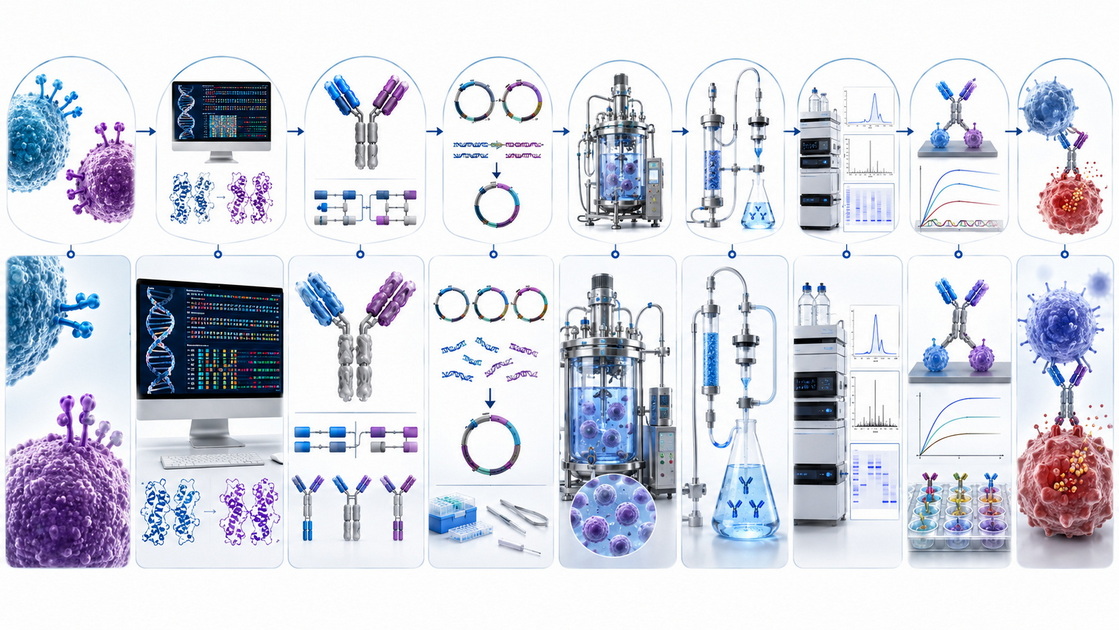
A well-designed bispecific antibody program moves from biological rationale to molecular design, expression, characterization, and functional testing. Skipping early design decisions can create avoidable rework later.
1. Define the Biological Hypothesis
Start with a precise scientific question.
Examples include:
- Can simultaneous blockade of Target A and Target B reduce a signaling response more effectively than either single binder?
- Does engaging Target A and CD3 support antigen-dependent immune-cell activation?
- Can dual recognition of Marker A and Marker B distinguish a target cell population from control cells?
- Does a specific epitope combination change receptor internalization or downstream signaling?
A strong hypothesis should identify the expected mechanism, relevant cell models, comparator molecules, and preferred readouts.
2. Select Target Pairs Carefully
Target selection should consider more than biological popularity. Researchers should review target expression, co-expression patterns, epitope accessibility, target shedding, receptor internalization, and expected safety relevance within the intended experimental context.
Useful early questions include:
- Are both targets present in the same experimental system?
- Are the targets expressed on the same cell or different cell populations?
- Is each epitope accessible to an antibody?
- Could soluble antigen interfere with binding?
- Does one target internalize quickly after antibody engagement?
- Is the desired function blocking, bridging, clustering, neutralization, or delivery?
3. Choose Binding Domains and Epitope Pairs
An existing monoclonal antibody sequence may provide a starting point, but epitope pairing requires deliberate evaluation. Two antibodies directed at biologically relevant targets may still fail as a bispecific pair if their epitopes, affinities, or geometry are not compatible.
At this stage, researchers may compare:
- Different variable-region sequences
- Alternative epitopes on the same target
- Different affinity levels
- Binding-arm orientations
- Single-domain, scFv, Fab, or full-length antibody modules
- Different linker lengths and linker compositions
4. Select a Molecular Architecture
The selected format should fit the mechanism.
For a cell-bridging molecule, the distance and orientation between two binding domains can affect immune synapse formation. For a dual-blocking molecule, the ability to bind both targets without steric interference may be more important than compact size. For a dual-antigen targeting construct, valency and avidity may become central design variables.
5. Build and Express a Focused Construct Panel
Rather than placing all resources behind one design, create a focused comparison panel. For example, a discovery panel may include:
- One lead sequence pair in two distinct formats
- A reversed variable-domain orientation
- A modified linker design
- A target-binding control
- A nonbinding or isotype-matched control when appropriate
This approach can reveal whether an early result is robust or dependent on one molecular architecture.
6. Characterize Molecular Properties
Initial characterization should assess whether the molecule produced matches the intended design and whether it is suitable for the planned research assays.
Common research-stage assessments include:
- Expression yield
- Purity profile
- Molecular size distribution
- Aggregation tendency
- Target-binding specificity
- Relative affinity and kinetic behavior
- Thermal stability
- Storage stability
- Functional potency in relevant cell-based assays
7. Conduct Functional and Comparative Studies
Functional testing should use controls that clarify the mechanism.
For example, a dual-targeting molecule can be compared with:
- Each parental monospecific antibody
- A combination of both parental antibodies
- Target-negative cells
- Single-positive and dual-positive cell models
- Binding-deficient variants
- Different target-density conditions
A bispecific molecule should not be judged only by whether it produces activity. The more valuable question is whether its behavior aligns with the proposed mechanism.
Critical Developability-Oriented Assessment Considerations
A bispecific antibody can show promising binding while still presenting practical engineering challenges. For this reason, early discovery and characterization should include a developability-oriented assessment rather than focusing on affinity alone.
Chain Pairing and Mispairing
In asymmetric IgG-like bispecific antibodies, a major challenge is ensuring that the intended heavy and light chains assemble correctly. Incorrect pairing can generate unwanted molecular species.
Strategies used to address this challenge may include:
- Engineered Fc heterodimerization
- Common light-chain approaches
- Domain exchange strategies
- Orthogonal Fab-interface engineering
- Single-chain or fusion-based designs
- Purification approaches that distinguish desired and undesired species
The optimal strategy depends on the selected format and the sequences being used.
Stability and Aggregation
Bispecific constructs can be more structurally complex than conventional antibodies. Fusion junctions, exposed hydrophobic regions, unstable scFv domains, and non-native interfaces can increase aggregation risk.
Useful research-stage assessments may include:
- Size-exclusion chromatography
- Dynamic light scattering
- Thermal shift analysis
- Accelerated storage comparisons
- Stress testing under selected laboratory conditions
- SDS-PAGE under reducing and non-reducing conditions
Early stability screening does not replace comprehensive later-stage studies, but it can prevent teams from advancing constructs with obvious liabilities.
Affinity, Avidity, and Functional Balance
The strongest individual binding affinity is not always the best design choice. A highly potent binding arm may dominate the interaction, alter cell bridging, increase nonspecific effects, or reduce the balance needed for dual-target engagement.
Researchers should evaluate:
- Association and dissociation rates
- Simultaneous binding capability
- Competition with natural ligands
- Antigen-density dependence
- Target-cell selectivity
- Functional potency relative to parental binders
A useful design principle is to optimize the whole molecular mechanism, not only one binding parameter.
Fc Function and Fc Engineering
For Fc-containing bispecific antibodies, Fc selection can influence experimental behavior. Depending on the research goal, teams may wish to preserve, reduce, or modify interactions associated with Fc receptors and complement pathways.
This is particularly relevant when interpreting immune-cell assays. Fc-mediated effects can complicate a result intended to reflect only the two engineered binding arms. The selected Fc design should therefore match the experimental question.
Common Bispecific Antibody Design Mistakes
Even technically sound antibody sequences can fail to deliver interpretable results when the overall design strategy is incomplete.
1: Selecting Targets Without a Clear Mechanistic Link
Two targets may each be relevant to a disease area but still be poorly matched for a bispecific approach. A strong program should explain why simultaneous engagement is expected to provide information beyond two separate monospecific reagents.
2: Using Only One Molecular Format
A single format can create false negatives or false positives. If a construct fails, the problem may be target biology, epitope choice, linker configuration, domain orientation, expression behavior, or format geometry.
Testing a rationally designed format panel can save substantial time.
3: Measuring Binding but Not Simultaneous Engagement
Binding each target individually does not prove that the molecule can productively engage both targets at the same time. Orthogonal assays should be used where possible to examine dual engagement and the intended functional outcome.
4: Ignoring Target Density
A molecule may perform differently on cells with high, moderate, or low target expression. Researchers should evaluate relevant target-density ranges and include appropriate target-negative controls.
5: Treating Aggregates as a Minor Issue
Aggregates can affect apparent binding, nonspecific interactions, assay reproducibility, and data interpretation. Early analytical evaluation is essential, especially for complex multivalent designs.
How Gene Universal Supports Bispecific Antibody Discovery
Gene Universal supports antibody research programs that require customized molecular design, recombinant production, and research-stage characterization. Our integrated service capabilities can help teams move from early target concepts to experimentally useful bispecific antibody candidates.
Our Research Support Capabilities
- Target and sequence consultation for discovery-stage antibody projects
- Custom gene synthesis and codon optimization
- Antibody sequence engineering for selected molecular formats
- scFv, Fab, IgG, Fc fusion, and bispecific antibody construct design
- Recombinant antibody expression in appropriate research systems
- Protein purification and research-grade material preparation
- Basic purity and molecular-size assessment
- Binding and functional assay support, depending on project scope
- DNA, RNA, recombinant protein, and antibody services within a coordinated workflow
Our teams work with researchers worldwide and can support projects involving custom antibody development, antibody humanization, affinity engineering, recombinant antibody production, protein expression, and bispecific antibody format exploration.
What Gene Universal Does Not Provide
To set clear expectations, Gene Universal does not provide:
- GMP manufacturing
- CDMO services
- IND submission support
- Commercial-scale manufacturing
- Regulatory filing services
- Clinical production services
Our work is centered on early discovery and characterization, exploratory molecular engineering, and the generation of fit-for-purpose research-grade materials.
Start a Custom Bispecific Antibody Project
A successful bispecific antibody project begins with an actionable plan: target pair, desired mechanism, starting sequences, preferred format, intended assay system, and key decision criteria.
If your team is exploring a T-cell engager, dual-pathway blocker, dual-antigen targeting construct, Fc-containing format, scFv-based molecule, or a comparative bispecific antibody panel, Gene Universal can help translate the research concept into a structured engineering and characterization workflow.
Contact Gene Universal to discuss your custom bispecific antibody development project and receive a research-focused proposal tailored to your targets, format requirements, and discovery goals.
Frequently Asked Questions
1. What is the difference between a bispecific antibody and a monoclonal antibody?
A monoclonal antibody typically recognizes one antigen or epitope. A bispecific antibody is engineered to recognize two targets or two epitopes, enabling dual-pathway blockade, cell bridging, dual-antigen targeting, or other multi-target research applications.
2. Which bispecific antibody format is best?
There is no single best format. The right format depends on the scientific objective, target biology, desired valency, binding geometry, Fc requirements, expression behavior, and intended functional assays. Comparing a small number of carefully selected formats is often more informative than relying on one design.
3. Can bispecific antibodies be used for T-cell engager research?
Yes. Many bispecific research constructs are designed to bind a target antigen on one cell population and CD3 on T cells. These molecules can be used to investigate target-dependent T-cell activation, immune synapse formation, cytokine release, and cytotoxicity in suitable research models.
4. Why is chain mispairing important in bispecific antibody engineering?
Some asymmetric bispecific formats require multiple heavy and light chains to assemble correctly. Incorrect pairing can create unwanted variants, which may affect purity, binding behavior, stability, and experimental interpretation. Molecular engineering strategies can help improve correct assembly.
5. What research-stage tests are useful for a bispecific antibody?
Useful assessments may include purity analysis, molecular-size distribution, aggregation evaluation, target-specific binding, simultaneous binding, thermal stability, storage stability, and relevant cell-based functional assays. The specific test plan should reflect the intended mechanism.
6. Can Gene Universal provide GMP, CDMO, or IND submission support?
No. Gene Universal provides research-focused services for early discovery and characterization, including custom antibody development and engineering, recombinant expression, purification, and fit-for-purpose research-grade materials. We do not provide GMP, CDMO, or IND submission support.
References
1. [U.S. Food and Drug Administration. Bispecific Antibody Development Programs: Guidance for Industry.](https://www.fda.gov/regulatory-information/search-fda-guidance-documents/bispecific-antibody-development-programs-guidance-industry)
2. [Brinkmann U, Kontermann RE. The Making of Bispecific Antibodies. mAbs. PubMed.](https://pubmed.ncbi.nlm.nih.gov/28071970/)
3. [Suurs FV, Lub-de Hooge MN, de Vries EGE, de Groot DJA. A Review of Bispecific Antibodies and Antibody Constructs in Oncology and Clinical Challenges. Pharmacology & Therapeutics. PubMed.](https://pubmed.ncbi.nlm.nih.gov/30312624/)
4. [Spiess C, Zhai Q, Carter PJ. Alternative Molecular Formats and Therapeutic Applications for Bispecific Antibodies. Molecular Immunology. PubMed.](https://pubmed.ncbi.nlm.nih.gov/27515792/)
5. [Labrijn AF, Janmaat ML, Reichert JM, Parren PWHI. Bispecific Antibodies: A Mechanistic Review of the Pipeline. Nature Reviews Drug Discovery.](https://www.nature.com/articles/s41573-019-0028-1)
6. [Klein C, et al. Progress in Overcoming the Chain Association Issue in Bispecific Heterodimeric IgG Antibodies. mAbs. PubMed.](https://pubmed.ncbi.nlm.nih.gov/22925968/)
7. [Brinkmann U, Kontermann RE. Bispecific Antibodies. Science. PubMed.](https://pubmed.ncbi.nlm.nih.gov/29590073/)
8. [European Medicines Agency. Guideline on Development, Production, Characterisation and Specifications for Monoclonal Antibodies and Related Products.](https://www.ema.europa.eu/en/development-production-characterisation-specifications-monoclonal-antibodies-related-products-scientific-guideline)
9. [National Academies of Sciences, Engineering, and Medicine. Monoclonal Antibody Production. NCBI Bookshelf.](https://www.ncbi.nlm.nih.gov/books/NBK100199/)
10. [Li F, et al. Design and Engineering of Bispecific Antibodies: Insights and Practical Approaches. PubMed.](https://pubmed.ncbi.nlm.nih.gov/38333084/)