 +1 302-235-9792
 SIGN IN
 CONTACT US


- News
- In Vivo vs In Vitro Experiments In Antibody Research And Development Workflows
share


In Vivo vs In Vitro Experiments In Antibody Research And Development Workflows
Content Menu
● In Vivo vs In Vitro: Why This Comparison Matters for Antibody Research
● What Do "In Vivo" and "In Vitro" Really Mean?
>> In Vivo: Experiments Within Living Organisms
>> In Vitro: Experiments in Controlled Laboratory Systems
● In Vitro Studies: Precision, Speed, and Mechanistic Insight
>> Key Advantages of In Vitro Experiments
>> Limitations of In Vitro Approaches
● In Vivo Studies: Biological Relevance and Whole-Organism Context
>> Key Advantages of In Vivo Experiments
>> Limitations and Ethical Considerations of In Vivo Work
● In Vivo vs In Vitro: A Structured Comparison for Antibody Workflows
● How Antibody Experts Combine In Vivo and In Vitro Data
● Building a Translational Chain: From Plate to Animal Model
● Reducing Animal Use Through Smarter In Vitro Design
● Designing Fit-for-Purpose Research-Grade Antibody Panels
● Frequently Asked Questions: In Vivo vs In Vitro in Antibody Research
● References
In vivo and in vitro experiments are two fundamental, complementary approaches in modern life science and antibody research. Understanding their differences—and how to integrate them effectively—is crucial for designing robust, efficient workflows from gene through antibody engineering and downstream translational studies.
In Vivo vs In Vitro: Why This Comparison Matters for Antibody Research
For teams working on custom antibody development and engineering, the choice between in vivo and in vitro experiments is not just a methodological detail, but a strategic decision that shapes data quality, project timelines, and the real-world relevance of research outcomes. When you treat "in vivo vs in vitro" as part of a coordinated experimental roadmap rather than an isolated choice, you can build a more reliable bridge between early discovery data and complex biological behavior.
From the perspective of a global research-use service provider, in vitro systems are often the backbone for early screening, characterization, and optimization of antibody candidates. In vivo models then become the crucial testing ground for confirming whether mechanistic hypotheses truly hold in living organisms. This article explores how these two approaches differ, how they complement each other, and how to use them intelligently in antibody-focused R&D.
What Do "In Vivo" and "In Vitro" Really Mean?
In Vivo: Experiments Within Living Organisms
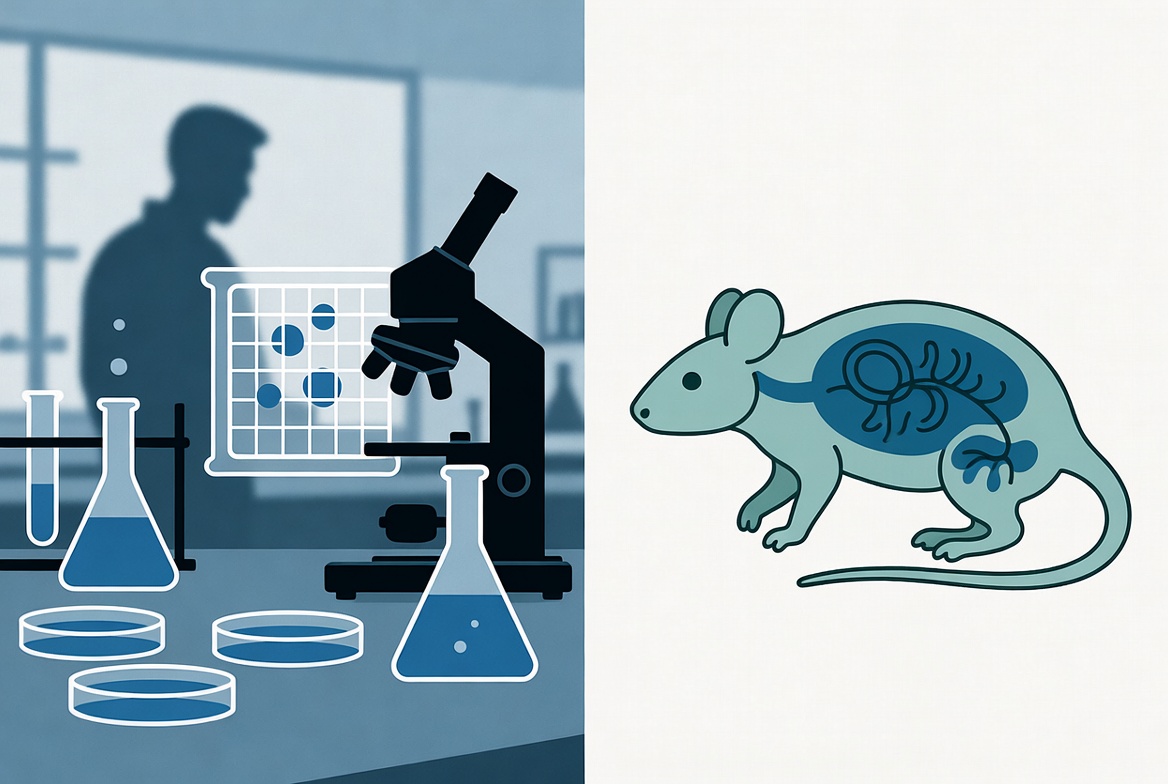
In vivo experiments are conducted in living organisms, such as animal models. They allow scientists to observe how an intervention behaves within the full complexity of an intact immune system, organ networks, and systemic physiology. In vivo settings are indispensable when your questions involve whole-organism effects, integrated pharmacology, or composite endpoints like survival, protection, or organ function.
In the context of antibody research, in vivo work is used to evaluate how they distribute throughout the body, how long they remain detectable or pharmacologically active, how they are cleared, and how they interact with immune and target tissues over time.
In Vitro: Experiments in Controlled Laboratory Systems
In vitro experiments take place outside living organisms, typically in controlled environments such as petri dishes, flasks, microplates, or microfluidic devices. These systems focus on isolated cells, tissues, or purified components and allow researchers to measure specific interactions with high precision and repeatability.
For antibody programs, in vitro work is used to study binding to antigens, functional activity on target cells, signaling pathways, stability, aggregation, and other properties under defined conditions. Because these experiments are more accessible, faster, and often more scalable, they are the foundation of early discovery and detailed mechanistic studies.
In Vitro Studies: Precision, Speed, and Mechanistic Insight
In many antibody engineering and recombinant screening workflows, in vitro studies are a key early step for evaluating antibody candidates. They provide a controlled environment for focusing on specific variables and mechanisms, which is essential when dealing with complex molecules and engineered formats.
Key Advantages of In Vitro Experiments
In vitro approaches offer several distinct benefits:
- High experimental control: Researchers can isolate one variable at a time—such as antigen concentration, buffer composition, or Fc modification—and directly observe its impact on binding or function.
- Scalability and throughput: Plate-based assays, automated liquid handling, and high-content imaging make it possible to screen large numbers of antibody variants in parallel.
- Time and cost efficiency: In vitro experiments are typically faster to set up and complete than animal studies, with lower resource requirements.
- Ethical benefits: Extensive in vitro work can significantly reduce the number of animals needed later in the workflow, supporting more responsible use of in vivo models.
Common in vitro readouts for antibody projects include binding kinetics, epitope specificity, cross-reactivity profiles, cell-based functional assays, and developability-oriented assessment, such as aggregation and stability under stress conditions.
Limitations of In Vitro Approaches
Despite their strengths, in vitro systems cannot fully capture the dynamic complexity of living organisms. Some key limitations include:
- Lack of integrated pharmacokinetics and biodistribution, including systemic exposure, tissue distribution, target-mediated clearance, FcRn-related recycling, and elimination over time.
- Simplified microenvironments, which may not reflect the full set of cell types, extracellular matrix components, or immune signaling present in tissues.
- Challenges in extrapolating in vitro potency and safety directly to organism-level outcomes.
Because of these limitations, in vitro data are most powerful when used to guide early discovery and characterization, not as stand-alone substitutes for in vivo validation.
In Vivo Studies: Biological Relevance and Whole-Organism Context
In vivo experiments provide the system-level context that in vitro systems inherently lack. When questions relate to how an antibody behaves in the presence of full immune networks, organ cross-talk, and physiological variation, in vivo models become essential.
Key Advantages of In Vivo Experiments
In vivo approaches offer several unique strengths:
- Realistic biological complexity: In vivo models capture dynamic interactions among immune cells, stromal cells, blood vessels, and target tissues.
- Integrated pharmacology: They allow evaluation of how antibodies reach target sites, how long they remain active, and how they are cleared from the body.
- Composite endpoints: In vivo studies can assess outcomes such as disease progression, survival, protection against pathogens, or functional improvement across multiple tissues.
For antibody research, in vivo experiments help confirm whether mechanistic hypotheses from in vitro studies translate into meaningful effects in a living system, and they can reveal off-target or emergent phenomena that would not be visible in isolated cell systems.
Limitations and Ethical Considerations of In Vivo Work
In vivo models also have important constraints:
- Higher costs and longer timelines due to animal care, experimental setup, and data collection.
- Species differences that can make direct extrapolation to human biology challenging.
- Ethical responsibilities requiring careful justification, optimized study design, and adherence to principles such as Replacement, Reduction, and Refinement.
These factors encourage teams to use in vivo resources strategically, reserving them for well-prioritized antibody candidates that have already passed rigorous in vitro filters.
In Vivo vs In Vitro: A Structured Comparison for Antibody Workflows
The table below summarizes key differences between in vivo and in vitro approaches for antibody-focused research.
| Aspect | In Vitro Experiments | In Vivo Experiments |
|---|---|---|
| Experimental environment | Controlled lab systems with isolated cells, tissues, or components | Whole organisms with intact immunity and systemic physiology |
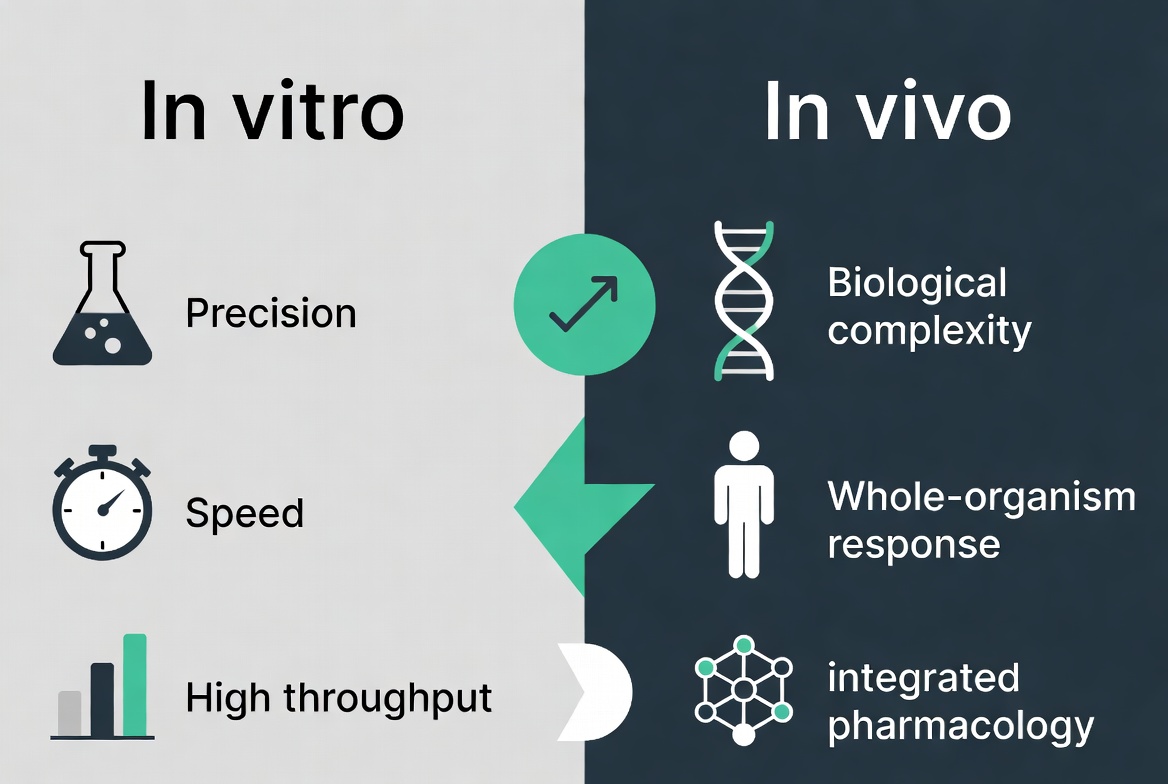
| Primary focus | Mechanistic detail: binding, signaling, functional potency | System-level response: efficacy, safety, biodistribution, exposure |
| Throughput | High, suited for screening many variants and conditions | Lower, limited by animal numbers and logistical complexity |
| Time and cost | Generally faster and more economical | Longer timelines and higher resource requirements |
| Typical endpoints | Binding affinity, kinetics, pathway activation, cell viability | Survival, clinical signs, tissue changes, protection, systemic biomarkers |
| Ethical footprint | Supports reduction of animal use through extensive early screening | Requires animal use, subject to ethical frameworks and oversight |
| Role in antibody workflow | Early discovery, developability-oriented assessment, fit-for-purpose research-grade characterization | Confirmatory studies, integrated pharmacology, complex endpoint validation |
This comparison underscores that neither approach is inherently "better"; each is suited to different questions. Effective antibody programs deliberately sequence in vitro and in vivo studies to extract maximum value from both.
How Antibody Experts Combine In Vivo and In Vitro Data
Experienced antibody teams rarely rely solely on either in vivo or in vitro. Instead, they build workflows that stage both approaches along a continuum, allowing data to accumulate and refine decisions at each step.
A typical pattern might look like this:
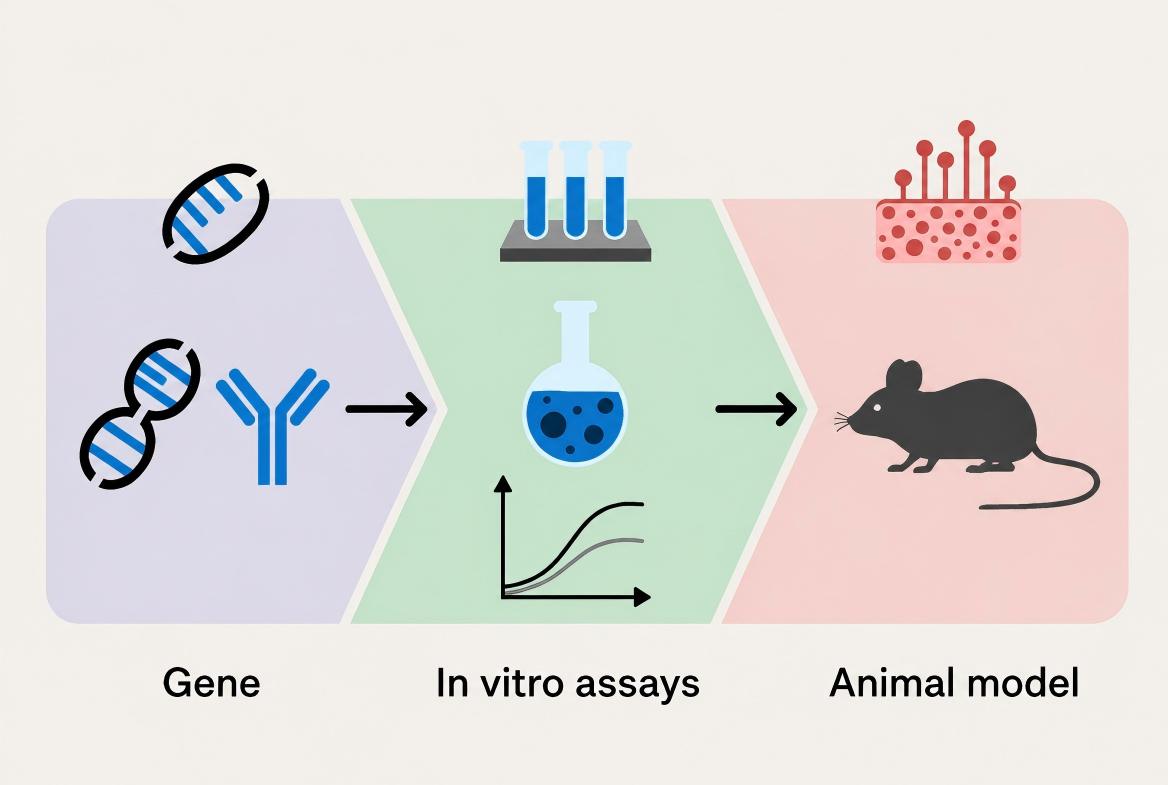
1. In Vitro Discovery and Screening
Antibody libraries or engineered candidates are first evaluated in biochemical and cell-based assays to identify binders, define specificity, and assess functional activity.
2. Mechanistic and Developability-Oriented In Vitro Validation
Selected candidates undergo deeper characterization, including multiple orthogonal assays, stability testing, and expression behavior in relevant cell systems. This step identifies fit-for-purpose research-grade materials suitable for further evaluation.
3. In Vivo Confirmation in Animal Models
Once a focused set of antibodies has strong in vitro evidence, in vivo models may be used by downstream partners to assess system-level efficacy, exposure, tolerability signals, and pharmacology.
4. Iterative Optimization and Feedback
Findings from in vivo experiments feed back into in vitro re-engineering cycles—refining affinity, specificity, or format—to improve early discovery and characterization in subsequent rounds.
This integrated approach minimizes risk, controls costs, and ensures that only well-supported candidates proceed into more complex and resource-intensive studies.
Building a Translational Chain: From Plate to Animal Model
One of the most powerful ways to combine in vivo and in vitro data is to design a "translational chain"—a logical sequence of experiments that connect simple laboratory readouts with complex organism-level outcomes.
Key elements of a strong translational chain include:
- Matching in vitro assay design to the biology of the eventual in vivo model, including cell types, target expression levels, and relevant microenvironment conditions.
- Using multiple, complementary in vitro assays to build a robust mechanistic picture before moving into animals.
- Selecting research-use candidates for in vivo testing based on clear criteria derived from binding, functional potency, and developability metrics.
When the early in vitro steps are closely aligned with downstream in vivo questions, the likelihood that signals will translate increases, and the number of unnecessary animal studies can be reduced.
Reducing Animal Use Through Smarter In Vitro Design
Ethical and scientific considerations both support the goal of using fewer animals while preserving data quality. Smarter in vitro design contributes to this goal in several ways:
- Combining biochemical assays with functional cell-based assays to confirm key effects without relying on a single readout.
- Using stress tests and stability assessments to eliminate unstable or poorly behaved antibodies early.
- Implementing orthogonal methods to validate important results and avoid carrying questionable candidates forward.
By investing effort into robust in vitro screening and characterization, teams ensure that only promising, fit-for-purpose research-grade materials progress into more demanding in vivo experiments.
Designing Fit-for-Purpose Research-Grade Antibody Panels
Not all antibodies in a program need identical depth of characterization. Structuring panels according to their role can improve efficiency and clarify experimental priorities:
- Screening antibodies are used for initial target exploration and require more basic profiling.
- Lead-like research-use candidates benefit from deeper in vitro characterization, including multiple functional assays and developability-oriented assessment.
- Mechanistic probes are engineered for specific epitope or signaling questions and require targeted but detailed in vitro studies.
This tiered approach aligns experimental depth with strategic goals, ensuring that teams do not over-invest in early candidates or under-characterize crucial leads.
Frequently Asked Questions: In Vivo vs In Vitro in Antibody Research
Q1: Is in vitro data ever enough on its own for antibody decision-making?
In vitro data can be sufficient for many research-only goals, including target validation, mechanistic studies, and selection of fit-for-purpose research-grade materials. However, when questions involve integrated physiology or long-term safety, in vivo models are usually required.
Q2: How can I decide whether my next experiment should be in vivo or in vitro?
Start with the biological question. If it focuses on a specific interaction, mechanism, or short-term effect on cells or tissues, in vitro is generally appropriate. If it focuses on whole-organism outcomes, complex immune dynamics, or systemic exposure, in vivo models are more suitable.
Q3: Why might an antibody that looks strong in vitro perform poorly in vivo?
An antibody may have excellent binding and functional potency in controlled conditions but encounter barriers in living systems, such as poor biodistribution, rapid clearance, or complex immune regulation that reduces its effectiveness.
Q4: How can teams reduce dependence on animal models without compromising results?
Teams can reduce animal use by strengthening in vitro panels, using multiple complementary assays, and setting clear criteria for progression to in vivo studies. This filters out weaker candidates and ensures that animal experiments focus on the most promising options.
Q5: What is the most efficient overall strategy for combining in vitro and in vivo in antibody projects?
The most efficient strategy is to treat in vitro as the engine of early discovery and detailed characterization, then reserve in vivo studies for confirmatory, high-value questions. By building a translational chain that links these stages, teams can maximize insights while managing cost, time, and ethical impact.
References
1. Medical News Today – In vivo vs. in vitro: What is the difference? https://www.medicalnewstoday.com/articles/in-vivo-vs-in-vitro
2. Verywell Health – In Vivo vs. In Vitro: What Are the Differences? https://www.verywellhealth.com/what-does-in-vivo-and-in-vitro-mean-2249118
3. Assay Genie – In Vitro vs In Vivo: Key Differences & When to Use Each https://www.assaygenie.com/blog/in-vitro-vs-in-vivo-key-differences-when-to-use-each/
4. PubMed – From in vitro Experiments to in vivo and Clinical Studies (PMID: 26778084) https://pubmed.ncbi.nlm.nih.gov/26778084/
5. NIH / PMC – An In Vitro and In Vivo Translational Research Approach for Hypoallergenic Formulas https://pmc.ncbi.nlm.nih.gov/articles/PMC9320663/
6. AINIA – In Vitro vs In Vivo: Key Differences, Definitions and Examples https://www.ainia.com/en/ainia-news/in-vitro-or-in-vivo-what-is-the-difference/