 +1 302-235-9792
 SIGN IN
 CONTACT US


- News
- Protein Expression QC by Western Blotting: A Reliable Anchor in Modern Protein Research
share


Protein Expression QC by Western Blotting: A Reliable Anchor in Modern Protein Research
Content Menu
● Why Protein Expression QC Matters in Early Discovery
● Western Blotting as a Core Tool for Protein Expression QC
>> What Western Blot Reveals About Your Protein
● Key Steps in a QC‑Oriented Western Blot Workflow
>> Designing Around the Question, Not the Technique
>> Sample Preparation and Fractionation
>> Electrophoresis and Transfer
>> Antibody Selection and Validation
>> Detection, Imaging, and Quantification
● Frequent Pitfalls in Protein Expression QC and How to Avoid Them
● Antibody Validation and the Role of Western Blot
● Western Blot in the Context of Broader Protein QC
● Ethical and Practical Aspects of Antibody Production for Western Blot
● How Gene Universal Integrates Western Blot into Research Workflows
● Practical Checklist for Protein Expression QC by Western Blot
● Closing Thoughts
● Frequently Asked Questions
>> 1. Is Western blotting still relevant when more advanced analytical technologies exist?
>> 2. How quantitative can Western blotting be for expression comparisons?
>> 3. What distinguishes a suitable Western blot result for protein expression QC?
>> 4. How should Western blotting be combined with other QC tools for antibody projects?
>> 5. Why is there so much emphasis on in vitro monoclonal antibody production?
● References
When you develop new protein constructs or custom antibodies, one of the first questions you must answer is simple: is the protein really there, and in the form you expect? Western blotting has been used to answer this question for decades and remains a staple in academic and industrial laboratories worldwide. [pubmed.ncbi.nlm.nih]
From my perspective working with protein scientists and antibody engineers, Western blot is rarely the only analytical method in use, but it is often the first method researchers trust before committing to more resource‑intensive assays. It offers a rapid, visual check on expression, chain integrity, and basic degradation patterns that can make or break a project's next step. [pmc.ncbi.nlm.nih]
Gene Universal operates as a life science service provider dedicated to global support of custom antibody development, protein production, and related molecular biology workflows. Our focus is on research-use candidates, preclinical research support, and early discovery and characterization, not on GMP manufacturing, CDMO services, or regulatory submission packages. Within this scope, Western blotting is a practical, high‑value tool for many of the projects we support.
Why Protein Expression QC Matters in Early Discovery
Before scaling up a construct, running complex functional assays, or initiating in vivo work, researchers need high‑confidence answers to a handful of core questions:
- Is the target protein expressed at all?
- Is it expressed at the expected molecular weight?
- Is it largely intact, or significantly degraded?
- Is it in the right compartment or fraction (soluble vs. insoluble, intracellular vs. secreted)?
Western blotting directly addresses these questions by combining size‑based separation with specific detection via antibodies or affinity reagents. This makes it particularly useful in the early cycles of design–build–test–learn, where rapid feedback is crucial. [pubmed.ncbi.nlm.nih]
For antibody and Fc‑fusion constructs, Western blot also helps confirm heavy‑ and light‑chain expression and assembly under reducing and non‑reducing conditions, providing early evidence that the construct behaves as designed at the protein level. [pmc.ncbi.nlm.nih]
Western Blotting as a Core Tool for Protein Expression QC
Comprehensive reviews from national research organizations describe Western blotting as an analytical technique that detects specific proteins in complex mixtures and provides information on presence, approximate abundance, and molecular weight. [ncbi.nlm.nih]
What Western Blot Reveals About Your Protein
A well‑executed Western blot can deliver several key insights for protein expression QC:
- Presence or absence of expression: A distinct band at the expected molecular weight in induced or treated samples indicates successful expression. [pmc.ncbi.nlm.nih]
- Approximate abundance: When exposures are kept within a linear range, relative band intensity allows semi‑quantitative comparisons between conditions or clones. [pmc.ncbi.nlm.nih]
- Integrity and degradation: Additional lower‑molecular‑weight bands may indicate truncated forms or proteolysis, while higher‑molecular‑weight bands can suggest aggregation or multimer formation. [pmc.ncbi.nlm.nih]
- Chain-level information for antibodies: Separate heavy‑ and light‑chain bands under reducing conditions reveal expression balance and potential misprocessing events. [pubmed.ncbi.nlm.nih]
These features make Western blot a powerful gatekeeper before you move to more specialized methods such as mass spectrometry, biophysical profiling, or complex functional assays. [pubmed.ncbi.nlm.nih]
Key Steps in a QC‑Oriented Western Blot Workflow
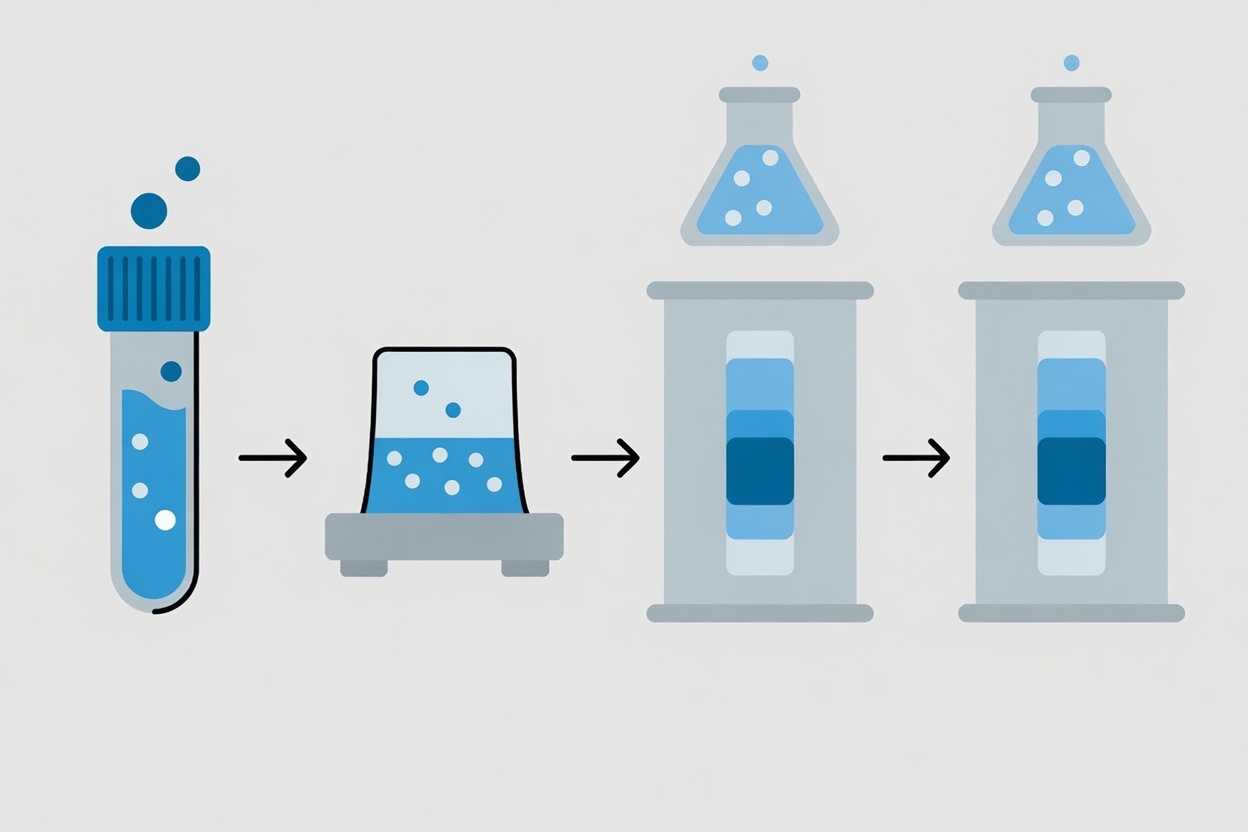
Western blotting is not inherently quantitative or reliable; it becomes so only when the workflow is deliberately designed. Guidance from major research institutions emphasizes control at each step, from sample preparation to detection. [pmc.ncbi.nlm.nih]
Designing Around the Question, Not the Technique
Before preparing any samples, clearly define what you need to learn:
- Go/no‑go decision for a new construct: Focus on strong positive and negative controls.
- Comparison of expression systems or conditions: Standardize total protein loading and use appropriate normalization strategies. [pmc.ncbi.nlm.nih]
- Clone ranking: Keep all signals within the linear dynamic range for robust densitometry. [pmc.ncbi.nlm.nih]
This mindset shifts Western blot from a qualitative "picture" to a decision‑support assay.
Sample Preparation and Fractionation
Many of the most detailed protocols stress that sample quality is the foundation of any useful blot. [abcam]
Good practice includes:
- Using compatible lysis buffers that preserve the epitope while efficiently solubilizing the protein.
- Performing fractionation (soluble vs. insoluble, intracellular vs. secreted) when solubility or secretion is in question. [pmc.ncbi.nlm.nih]
- Quantifying total protein (for example by BCA) and loading equal amounts per lane when comparing conditions. [pmc.ncbi.nlm.nih]
For expression QC, analyzing both soluble and insoluble fractions on the same blot frequently reveals whether a construct is expressed but misfolded or aggregated. [pubmed.ncbi.nlm.nih]
Electrophoresis and Transfer
Misinterpretation often originates from the separation or transfer stage. Detailed methodological articles repeatedly highlight:
- Selecting an appropriate gel percentage for the expected molecular weight range. [pmc.ncbi.nlm.nih]
- Including pre‑stained molecular weight markers to correctly assign band sizes. [pubmed.ncbi.nlm.nih]
- Optimizing transfer time, voltage, and membrane type (nitrocellulose vs. PVDF) to ensure uniform transfer for proteins of different sizes. [pmc.ncbi.nlm.nih]
Without these controls, even a good antibody cannot rescue a poor blot.
Antibody Selection and Validation
The performance of a Western blot is only as strong as the specificity and quality of the primary antibody. [nature]
Important considerations include:
- Using antibodies that have been experimentally validated for Western blotting, ideally with data supporting specificity and linear detection range. [nature]
- Confirming that loading controls are stable in the specific biological context under study, rather than assuming classic housekeeping proteins are always unchanged. [nature]
- For custom monoclonal antibodies, running Western blot in parallel with ELISA and other assays to characterize specificity and epitope recognition, as shown in multiple characterization studies. [pubmed.ncbi.nlm.nih]
Detection, Imaging, and Quantification
Modern imaging systems and reagents can support semi‑quantitative or quantitative Western blotting, but only when experiments are designed with dynamic range in mind. [nature]
Best practices include:
- Avoiding saturated signals by capturing multiple short exposures rather than a single long one. [pmc.ncbi.nlm.nih]
- Using replicate samples and densitometric analysis to compare relative expression levels. [pmc.ncbi.nlm.nih]
- Recording antibody dilutions, incubation times, and imaging settings to enable reproducibility. [pmc.ncbi.nlm.nih]

Frequent Pitfalls in Protein Expression QC and How to Avoid Them
Large‑scale reviews of Western blot practice highlight several recurring issues that undermine data quality. [pubmed.ncbi.nlm.nih]
Some of the most common include:
- Non‑specific bands: Often due to insufficient antibody validation, high antibody concentrations, or suboptimal blocking and wash conditions. [nature]
- Uneven transfer or distorted bands: Caused by poor gel casting, overheating during electrophoresis, or uneven contact during transfer. [pmc.ncbi.nlm.nih]
- Unreliable normalization: Using housekeeping proteins as loading controls without confirming their stability under experimental conditions can lead to biased conclusions. [pmc.ncbi.nlm.nih]
- Overinterpretation of single blots: Drawing strong conclusions from one gel without replicates or complementary methods increases the risk of misleading results. [nature]
Recognizing these pitfalls and addressing them systematically transforms Western blot from a rough visualization tool into a reproducible QC method.
Antibody Validation and the Role of Western Blot
In recent years, there has been a push toward more rigorous validation of research antibodies, including those used for Western blotting and those generated as project outputs. [pubmed.ncbi.nlm.nih]
One widely discussed framework introduces multiple "pillars" of validation, such as:
- Genetic approaches (knockout or knockdown)
- Orthogonal methods (for example, comparing Western blot to quantitative mass spectrometry)
- Independent antibodies targeting different epitopes
- Tagged proteins and immunocapture approaches [nature]
Western blot is deeply integrated into this framework as:
- A primary method for confirming that an antibody recognizes a single dominant band at the expected size in relevant samples. [pmc.ncbi.nlm.nih]
- A complementary method to corroborate results from ELISA, flow cytometry, or immunohistochemistry, especially in antibody discovery and characterization campaigns. [pubmed.ncbi.nlm.nih]
For custom monoclonal antibody projects, published case studies commonly use Western blot side‑by‑side with ELISA and functional assays to support conclusions about specificity and performance. [pubmed.ncbi.nlm.nih]

Western Blot in the Context of Broader Protein QC
Guidance from agencies such as the EMA and FDA emphasizes that thorough characterization of monoclonal antibodies and related products should combine multiple analytical methods to address identity, purity, and structure–function relationships. [ema.europa]
Even though Gene Universal focuses on research‑grade and preclinical research support, similar principles apply when designing characterization strategies:
- Use Western blot for identity confirmation, chain integrity assessment, and qualitative detection of degradation products. [ncbi.nlm.nih]
- Use orthogonal methods such as chromatographic and mass‑spectrometric techniques for deeper purity and impurity profiling. [fdcell]
- Assemble a fit‑for‑purpose analytical panel that matches the decision you need to make at the current stage of a project. [ema.europa]
Framing Western blot as part of a coordinated suite of methods rather than an isolated test strengthens both internal decision‑making and external confidence in the data.
Ethical and Practical Aspects of Antibody Production for Western Blot
When generating monoclonal antibodies to use as Western blot reagents or as project outputs, many organizations now favor in vitro production methods over mouse ascites wherever feasible. [ncbi.nlm.nih]
Key findings from National Academies and related analyses include:
- Modern in vitro systems (such as bioreactors and specialized culture flasks) can achieve high yield and reliability, adequate for most research applications. [ncbi.nlm.nih]
- In vitro methods support better process control, batch‑to‑batch consistency, and QC, including consistent behavior in Western blot assays. [pubmed.ncbi.nlm.nih]
- They align with widely accepted principles for reducing, refining, and replacing animal use where possible. [ncbi.nlm.nih]
Aligning antibody production practices with these recommendations enhances both scientific and ethical credibility.
How Gene Universal Integrates Western Blot into Research Workflows
Within its global service portfolio, Gene Universal uses Western blotting as a practical QC and characterization tool at several points in protein and custom antibody projects:
- Early expression screening: Confirming that new constructs express in bacterial, insect, or mammalian systems and that expression levels justify further optimization.
- Chain and integrity checks for antibodies and Fc fusions: Examining heavy‑ and light‑chain expression, assembly, and potential fragmentation.
- Comparative expression analysis: Semi‑quantitative comparison of clones, vectors, or culture conditions before scale‑up or purification. [pmc.ncbi.nlm.nih]
- Supporting developability‑oriented assessments: Providing protein‑level data that complement binding assays and biophysical measurements during early discovery.
In each of these contexts, the emphasis is on fit‑for‑purpose research‑grade materials and data, not on clinical release testing or dossier preparation.
Practical Checklist for Protein Expression QC by Western Blot
The table below summarizes practical questions and what to look for during expression QC:
| QC Question | What to Look for on the Blot | Next Consideration |
|---|---|---|
| Is my protein expressed? | Distinct band at expected molecular weight in induced sample | Optimize expression if signal is weak or borderline. (pmc.ncbi.nlm.nih) |
| Is it soluble? | Comparison of soluble vs. insoluble fractions | Adjust temperature, induction, or additives if largely insoluble. (pmc.ncbi.nlm.nih) |
| Is there significant degradation? | Lower‑molecular‑weight bands near target size | Improve protease inhibition, storage, or purification steps. (pmc.ncbi.nlm.nih) |
| Are chains balanced (for antibodies)? | Heavy‑ and light‑chain bands with appropriate intensities | Refine construct design or expression system if imbalance is strong. (pmc.ncbi.nlm.nih) |
| Is the antibody specific? | Single main band at expected size in relevant samples | Confirm with additional methods if off‑target bands appear. (nature) |
This simple checklist can serve as a practical companion when planning or reviewing Western‑blot‑based QC for new protein and antibody projects.
Closing Thoughts
Western blotting has been practiced for more than three decades, yet it remains one of the most trusted and adaptable methods for protein expression quality control across research laboratories worldwide. When executed with rigor—from sample preparation and transfer to antibody validation and quantification—it offers a level of clarity that directly informs design decisions and resource allocation. [pubmed.ncbi.nlm.nih]
For a global service provider focused on DNA/RNA, protein, and custom antibody solutions for research, Western blot is not a legacy technique to be discarded, but a versatile anchor that connects molecular design with real‑world protein behavior in cells and culture systems. By combining this method with complementary assays and modern production approaches, research teams can move from uncertainty to confident next steps with far greater speed and reliability. [ema.europa]
Frequently Asked Questions
1. Is Western blotting still relevant when more advanced analytical technologies exist?
Yes. Reviews from major research organizations describe Western blotting as a powerful and widely used method for detecting and semi‑quantifying individual proteins in complex mixtures. More advanced platforms add depth but do not replace the straightforward, visual information that a well‑designed blot provides in early stages. [ncbi.nlm.nih]
2. How quantitative can Western blotting be for expression comparisons?
Western blotting can support semi‑quantitative or quantitative comparisons if experiments are designed with linear range, proper normalization, and appropriate antibody validation in mind. This typically involves careful control of loading amounts, use of stable reference signals, and densitometric analysis of replicate samples. [pmc.ncbi.nlm.nih]
3. What distinguishes a suitable Western blot result for protein expression QC?
For expression QC, a suitable blot generally shows a clear band at the expected molecular weight, appropriate positive and negative controls, and a well‑documented experimental setup. When feasible, results are strengthened by additional methods such as chromatographic analysis or functional assays. [fdcell]
4. How should Western blotting be combined with other QC tools for antibody projects?
For antibody work, Western blotting is often combined with assays such as ELISA for binding, cell‑based assays for function, and biophysical methods for aggregation or stability. This layered approach supports comprehensive understanding of antibody performance, even in early discovery stages. [pubmed.ncbi.nlm.nih]
5. Why is there so much emphasis on in vitro monoclonal antibody production?
Reports from national committees and comparative studies show that in vitro monoclonal antibody production systems can reduce animal use while delivering high yields and consistent quality for research purposes. These systems also support better control of production parameters, which helps ensure predictable behavior in applications such as Western blotting. [pubmed.ncbi.nlm.nih]
References
1. Gavini K et al. *Western Blot: Principles, Procedures, and Clinical Applications.* NCBI Bookshelf.
https://www.ncbi.nlm.nih.gov/books/NBK542290/ [ncbi.nlm.nih]
2. Taylor SC, Posch A. *Western Blotting: An Introduction.* PMC – NIH.
https://pmc.ncbi.nlm.nih.gov/articles/PMC7304528/ [pmc.ncbi.nlm.nih]
3. Mahmood T, Yang PC. *Western Blot: Technique, Theory, and Troubleshooting.* PMC – NIH.
https://pmc.ncbi.nlm.nih.gov/articles/PMC3456489/ [pmc.ncbi.nlm.nih]
4. Ghosh R et al. *An Overview of Technical Considerations for Western Blotting Applications to Physiological Research.* PMC – NIH.
https://pmc.ncbi.nlm.nih.gov/articles/PMC5138151/ [pmc.ncbi.nlm.nih]
5. Gilda JE, Gomes AV. *Western Blotting: Sample Preparation to Detection and Quantification.* PMC – NIH.
https://pmc.ncbi.nlm.nih.gov/articles/PMC3185633/ [pmc.ncbi.nlm.nih]
6. Sukumaran P et al. *Western Blotting (Immunoblotting): History, Theory, Uses and Troubleshooting.* PubMed.
https://pubmed.ncbi.nlm.nih.gov/36971113/ [pubmed.ncbi.nlm.nih]
7. Kurien BT, Scofield RH. *Western Blotting.* PubMed.
https://pubmed.ncbi.nlm.nih.gov/21331721/ [pubmed.ncbi.nlm.nih]
8. Taylor SC, Kennedy‑Darling J et al. *A Critical Path to Producing High‑Quality, Reproducible Data with Quantitative Western Blotting.* Scientific Reports.
https://www.nature.com/articles/s41598-022-22294-x [nature]
9. Hughes CS et al. *The Design of a Quantitative Western Blot Experiment.* PMC – NIH.
https://pmc.ncbi.nlm.nih.gov/articles/PMC3971489/ [pmc.ncbi.nlm.nih]
10. Goodman SL. *Enhanced Validation of Antibodies for Research Applications.* Nature Communications.
https://www.nature.com/articles/s41467-018-06642-y [nature]
11. National Research Council. *Monoclonal Antibody Production.* NCBI Bookshelf (Introduction, In Vitro Production, Committee Report).
https://www.ncbi.nlm.nih.gov/books/NBK100188/ [ncbi.nlm.nih]
https://www.ncbi.nlm.nih.gov/books/NBK100192/ [ncbi.nlm.nih]
https://www.ncbi.nlm.nih.gov/books/NBK100199/ [ncbi.nlm.nih]
12. De Geus B, Hendriksen CFM et al. *Comparative Methods for In Vitro Monoclonal Antibody Production.* PubMed.
https://pubmed.ncbi.nlm.nih.gov/11178564/ [pubmed.ncbi.nlm.nih]
13. Various authors. Studies on bioreactor‑based monoclonal antibody production and alternatives to ascites.
https://pubmed.ncbi.nlm.nih.gov/2522980/ [pubmed.ncbi.nlm.nih]
https://pubmed.ncbi.nlm.nih.gov/12191510/ [pubmed.ncbi.nlm.nih]
https://pubmed.ncbi.nlm.nih.gov/18633992/ [pubmed.ncbi.nlm.nih]
14. EMA. *Guideline on Development, Production, Characterisation and Specification for Monoclonal Antibodies and Related Products – Revision 1.*
https://www.ema.europa.eu/en/development-production-characterisation-specifications-monoclonal-antibodies-related-products-scientific-guideline [ema.europa]
15. FDA. *Guidance for Industry: Manufacture and Testing of Monoclonal Antibody Products for Human Use* and related quality documents.
https://www.fda.gov/media/70845/download [fda]
https://www.fda.gov/media/76798/download [fda]
16. Representative monoclonal antibody production and characterization studies employing Western blotting.
https://pubmed.ncbi.nlm.nih.gov/9041412/ [pubmed.ncbi.nlm.nih]
https://pubmed.ncbi.nlm.nih.gov/7685397/ [pubmed.ncbi.nlm.nih]
https://pubmed.ncbi.nlm.nih.gov/8934393/ [pubmed.ncbi.nlm.nih]
https://pubmed.ncbi.nlm.nih.gov/7689533/ [pubmed.ncbi.nlm.nih]