 +1 302-235-9792
 SIGN IN
 CONTACT US


- News
- What Is an Anti-Idiotypic Antibody? A Complete Guide to Types, Functions, and Research Applications
share


What Is an Anti-Idiotypic Antibody? A Complete Guide to Types, Functions, and Research Applications
Content Menu
● What Is an Anti-Idiotypic Antibody? Core Definitions
>> Understanding Idiotype, Idiotope, and Paratope
● The Three Types of Anti-Idiotypic Antibodies
>> Type 1 — Antigen-Blocking (Paratope-Specific) Anti-IDs
>> Type 2 — Non-Blocking (Idiotope-Specific) Anti-IDs
>> Type 3 — Complex-Specific Anti-IDs
● How Are Anti-Idiotypic Antibodies Generated?
>> Hybridoma-Based Monoclonal Production
>> Polyclonal Anti-ID Generation
>> Recombinant Generation via Phage Display
● Key Research Applications of Anti-Idiotypic Antibodies
>> Pharmacokinetic (PK) Assays for Antibody Drugs
>> Immunogenicity Testing and ADA Assay Development
>> Anti-Idiotypic Antibodies in Immune Network and Vaccine Research
>> The Ab2β "Internal Image" Concept in Preclinical Research
● The Idiotypic Network: The Scientific Foundation
● Industry Context: Why Anti-ID Demand Is Accelerating
● Custom Anti-Idiotypic Antibody Development with Gene Universal
● Frequently Asked Questions (FAQ)
>> Q1: What is the difference between an anti-idiotypic antibody and an anti-drug antibody (ADA)?
>> Q2: How long does it take to generate custom anti-idiotypic antibodies?
>> Q3: What format of anti-ID is best for a PK bridging ELISA?
>> Q4: Can anti-idiotypic antibodies be used with bispecific antibody drugs?
>> Q5: What is the significance of Ab2β "internal image" anti-IDs in vaccine research?
● References
Anti-idiotypic antibodies (anti-IDs) are among the most specialized and scientifically valuable tools in modern biotherapeutic research. As the demand for antibody therapeutics continues to rise — with the global monoclonal antibody market valued at over $252.6 billion in 2024 — the need for precise, research-grade bioanalytical reagents has never been greater. Anti-idiotypic antibodies sit at the core of this infrastructure, enabling researchers to track, quantify, and characterize antibody drugs with remarkable specificity.
At Gene Universal, we support researchers worldwide with custom antibody development and engineering services — offering end-to-end solutions from antigen design to fit-for-purpose research-grade materials across more than 100 countries. This guide provides a comprehensive, science-backed overview of anti-idiotypic antibodies: what they are, how they work, how they are generated, and why they matter in today's preclinical research landscape.
What Is an Anti-Idiotypic Antibody? Core Definitions
Understanding Idiotype, Idiotope, and Paratope
To understand anti-idiotypic antibodies, you first need to understand a few key structural concepts:
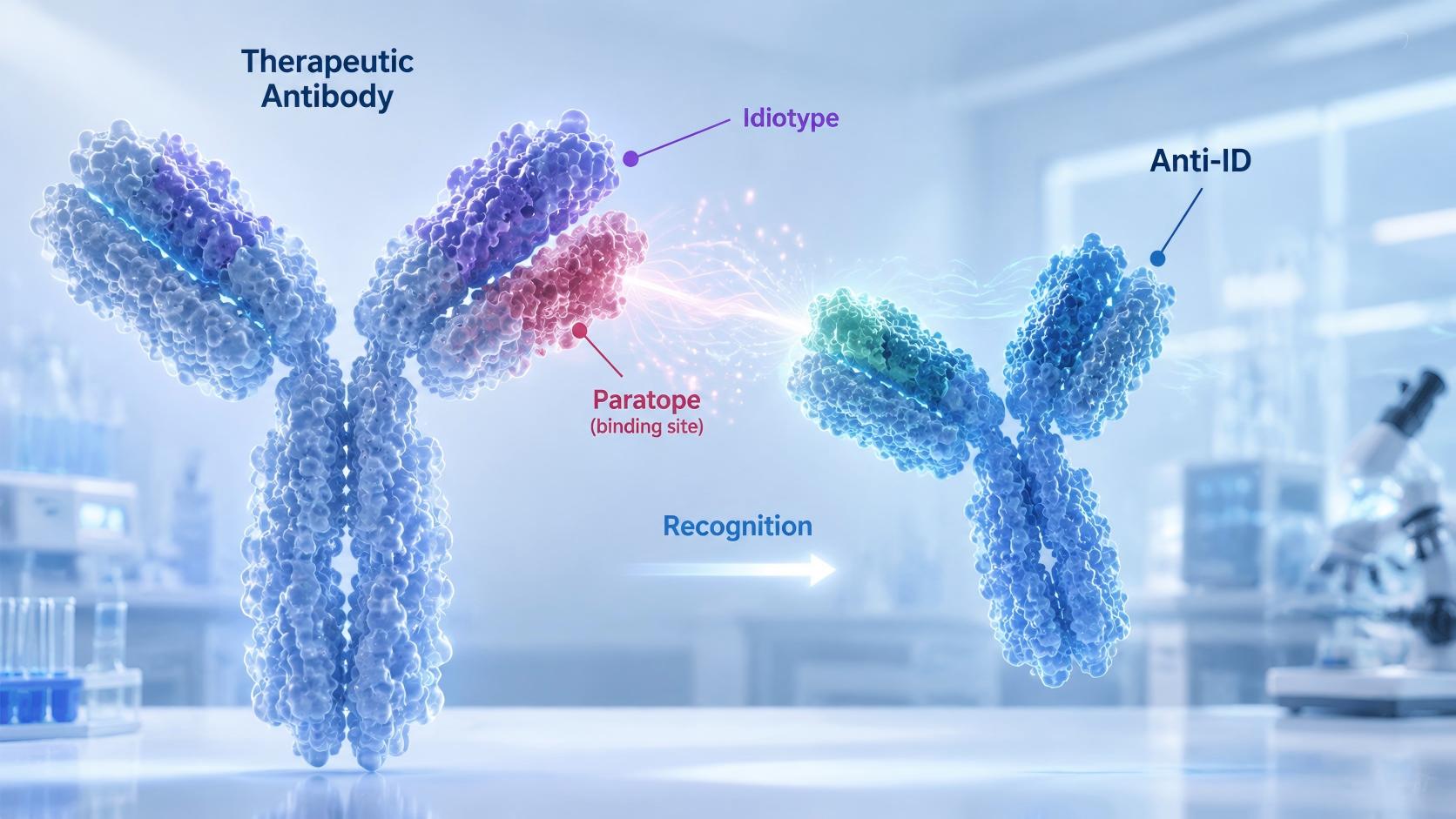
- Idiotype: The unique set of antigenic determinants found within an antibody's variable region — specifically within its complementarity-determining regions (CDRs). Each antibody drug has a distinctive idiotype, almost like a molecular fingerprint.
- Idiotope: A single antigenic determinant within the idiotype. The idiotope is the specific region within the antibody's Fv domain that is recognized by a different antibody.
- Paratope: The antigen-binding site of an antibody — the region that contacts and binds to the target antigen's epitope.
An anti-idiotypic antibody (anti-ID) is an antibody whose paratope targets the idiotope of another antibody — typically an antibody drug of interest. In effect, anti-IDs "recognize the recognizer," binding to the variable region of a target antibody rather than to a conventional antigen. This structural relationship forms the conceptual foundation of Niels Jerne's Idiotypic Network Theory, which proposed that the immune system is self-regulated through a web of interacting idiotype–anti-idiotype interactions.
The Three Types of Anti-Idiotypic Antibodies
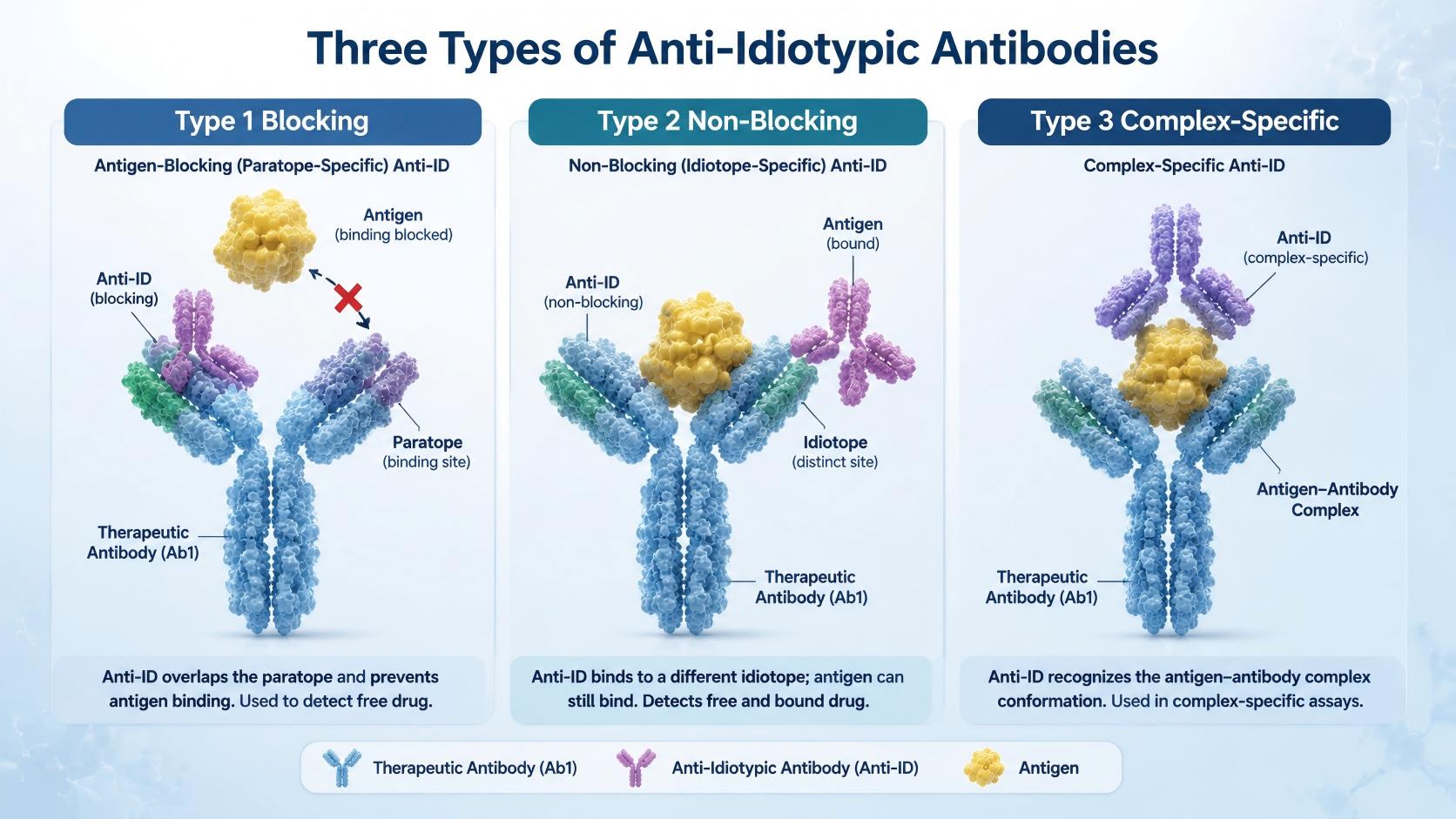
Not all anti-IDs interact with their target antibody in the same way. In bioanalytical assay development, anti-idiotypic antibodies are often functionally classified as blocking, non-blocking, or complex-specific reagents, depending on how they interact with the therapeutic antibody and its target antigen.
Type 1 — Antigen-Blocking (Paratope-Specific) Anti-IDs
How it works: The idiotope targeted by this anti-ID overlaps directly with the antibody drug's paratope (antigen-binding site). This means the anti-ID and the drug's target antigen directly compete for the same binding location.
What it detects: Because the drug's paratope is occupied when it is bound to its antigen, Type 1 blocking anti-IDs are commonly used to preferentially detect free drug because target-bound drug may be sterically or competitively unavailable for anti-ID binding.
Key research application: Measuring free drug concentrations in serum or plasma — critical for understanding the pharmacokinetics of unbound therapeutic antibody in preclinical models.
Type 2 — Non-Blocking (Idiotope-Specific) Anti-IDs
How it works: The idiotope recognized by this anti-ID does not overlap with the drug's paratope. The antibody drug can therefore bind both its target antigen and the Type 2 anti-ID simultaneously, without interference.
What it detects: Type 2 non-blocking anti-IDs are often selected for total drug assays because they can bind an idiotope outside the antigen-binding site and may detect both free and target-bound drug, provided the idiotope remains accessible in the assay format.
Key research application: Measuring total drug levels; ideal for sandwich ELISA formats used in pharmacokinetic (PK) assays.
Type 3 — Complex-Specific Anti-IDs
How it works: This anti-ID requires the drug to already be bound to its antigen before it can recognize and bind the idiotope. It is conformationally dependent on the drug–antigen complex.
What it detects: Type 3 complex-specific anti-IDs preferentially recognize the drug–target complex and can be useful for studying target engagement or complex formation. However, complex detection should not automatically be interpreted as functional activity without supporting bioassay data.
Key research application: Mechanistic studies of drug engagement and target occupancy in preclinical research systems.
| Anti-ID Type | Binding Site | Drug Form Detected | Primary Application |
|---|---|---|---|
| Type 1 — Antigen-Blocking | Overlaps with paratope | Free drug only | Free drug PK measurement |
| Type 2 — Non-Blocking | Outside paratope | Free + bound drug | Total drug PK assays |
| Type 3 — Complex-Specific | Requires drug–antigen complex | Bound drug only | Drug engagement studies |
How Are Anti-Idiotypic Antibodies Generated?
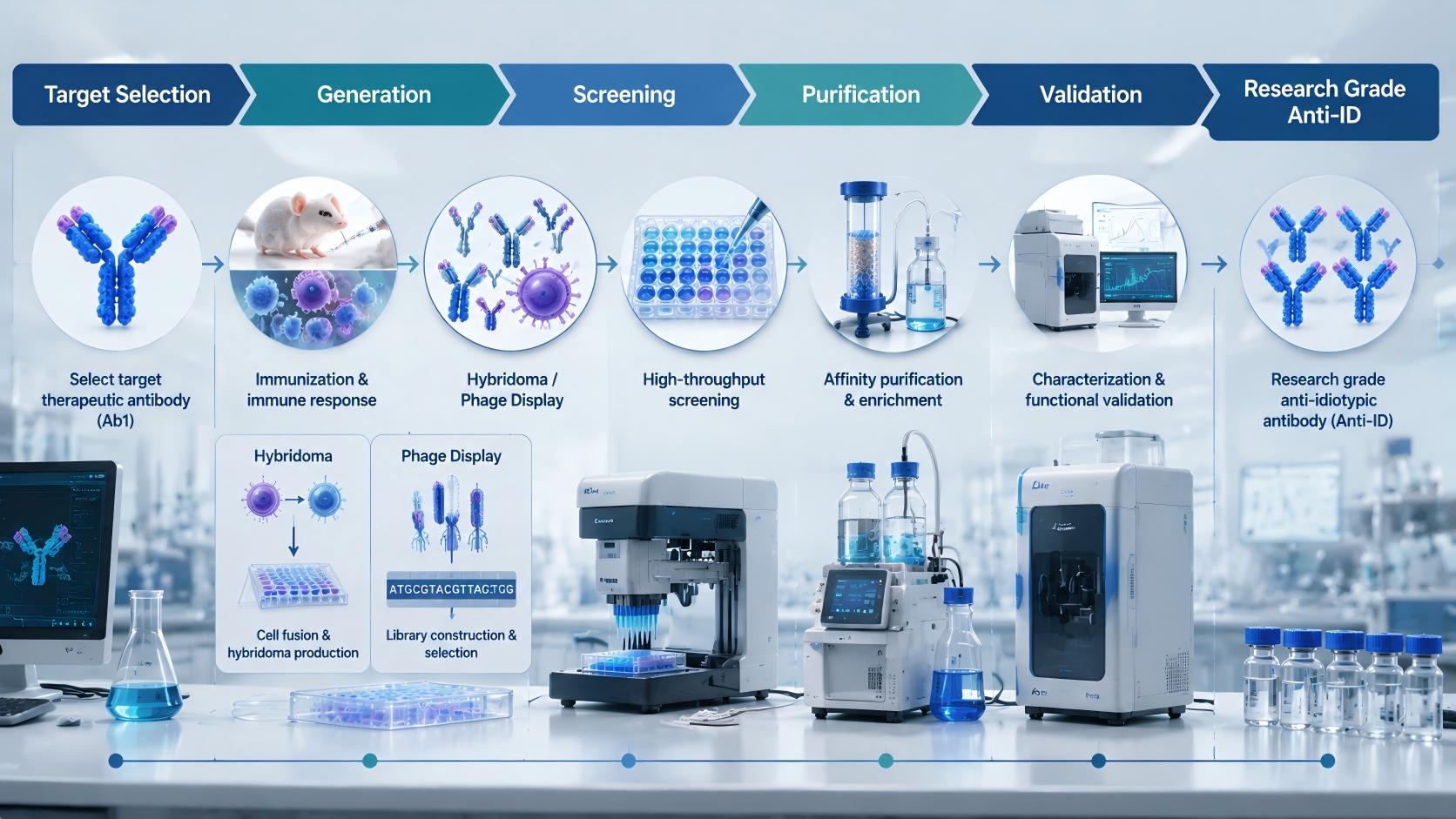
The generation of high-quality anti-ID antibodies requires deep expertise in immunization strategy, screening methodology, and affinity purification. Three primary approaches are used in modern research.
Hybridoma-Based Monoclonal Production
The classic hybridoma approach involves immunizing a host animal (typically mouse, rat, or rabbit) with a target antibody drug — often using the Fab fragment to focus the immune response on the variable region rather than the constant region. After sufficient immunization, spleen cells are fused with myeloma cells to create immortalized hybridoma cell lines producing stable monoclonal anti-ID antibodies.
Key considerations:
- Fab fragments are preferred as immunogens to avoid antibodies targeting the constant-region Fc domain
- Counter-selection against normal human IgG ensures drug-specific binding only
- Rabbit-derived monoclonal anti-IDs often offer superior affinity and CDR diversity compared to rodent equivalents
- Deliverables typically include: stable hybridoma lines, purified monoclonal antibody, and comprehensive characterization including blocking type and specificity data
Polyclonal Anti-ID Generation
Polyclonal anti-IDs are generated in a variety of host species — including rabbit, sheep, goat, and non-human primate — and offer faster turnaround compared to monoclonal generation. The standard workflow involves:
1. Immunization of host animals with the target antibody drug (full IgG or Fab fragment).
2. Titer monitoring via ELISA throughout the immunization protocol.
3. Antiserum collection once titers reach optimal levels.
4. Two-step affinity purification: positive selection against the drug molecule, followed by negative depletion against normal human IgG to remove cross-reactive antibodies.
5. Final characterization for concentration, purity, and drug-specific binding.
Polyclonal anti-IDs are especially well-suited for immunogenicity assays as positive controls, given their ability to mimic the heterogeneous anti-drug antibody (ADA) response patterns observed in research subjects.
Recombinant Generation via Phage Display
Phage display technology — particularly large human combinatorial antibody libraries exceeding tens of billions of members — has transformed the field of anti-ID generation. In this approach:
- The target antibody drug serves as a selection antigen in successive rounds of phage panning.
- Antigen-specific elution followed by competitive selection strategies enables isolation of anti-IDs with desired binding modes.
- Resulting Fab fragments can be further engineered for optimized affinity, format, and downstream conjugation.
Key advantages of recombinant anti-IDs:
- Fully defined amino acid sequence — ensuring long-term lot-to-lot reproducibility.
- No requirement for animal immunization — reducing biological variability.
- Flexibility for engineering into diverse antibody formats (IgG, Fab, scFv, bispecific).
- Ideal for generating validated matched pairs for sandwich assay development.
- Can be produced on accelerated timelines using optimized library selection protocols.
Key Research Applications of Anti-Idiotypic Antibodies
Anti-IDs serve as irreplaceable research reagents in the preclinical characterization of biotherapeutic antibodies. Their primary applications span pharmacokinetics, immunogenicity testing, and foundational vaccine research.
Pharmacokinetic (PK) Assays for Antibody Drugs
One of the most critical uses of anti-IDs in early discovery and characterization is enabling pharmacokinetic analysis of antibody therapeutics. PK studies measure the rate and extent of drug absorption, distribution, and clearance in biological systems — and anti-IDs provide the specificity needed to distinguish an antibody drug from the thousands of endogenous antibodies present in biological fluids.
Anti-ID-based ELISA formats used in PK research include:
- Anti-ID Bridging Assay: An anti-ID-coated plate captures the antibody drug; a second labeled anti-ID is used for detection. This format typically detects total or free drug depending on the anti-ID type selected.
- Anti-ID Capture Sandwich Assay: An anti-ID-coated plate captures the drug, and a labeled anti-constant-region IgG is used for detection of total drug.
- Anti-ID Antigen-Bridging Assay: An anti-ID-coated plate captures the drug; a labeled target antigen then detects drug that retains binding activity.
- Antigen Capture Assay: An antigen-coated plate captures the drug, and a labeled anti-Fc antibody provides visualization.
The selection of the correct anti-ID type is critical: Type 1 anti-IDs measure free drug, Type 2 anti-IDs measure total drug, and a combination of both enables a complete picture of drug availability in research samples.
Immunogenicity Testing and ADA Assay Development
Immunogenicity refers to the ability of a therapeutic antibody to elicit an immune response — including the generation of anti-drug antibodies (ADAs) — in the treated subject. ADAs can neutralize the therapeutic effect, alter drug pharmacokinetics, or trigger safety concerns, making immunogenicity assessment a fundamental component of preclinical antibody research.
Regulatory agencies recommend a tiered, validated approach to ADA assessment:
1. A sensitive screening assay designed to maintain a controlled false-positive rate.
2. A confirmatory assay to verify drug-specific ADA binding.
3. A titration assay for semi-quantitative ADA assessment.
4. A neutralizing antibody assay to determine functional impact on drug activity.
Polyclonal anti-IDs are commonly used as positive controls in ADA assays because they can better represent heterogeneous ADA-like binding responses than a single monoclonal reagent. The choice of positive control should be justified based on assay purpose, sensitivity requirements, and regulatory expectations.
Anti-Idiotypic Antibodies in Immune Network and Vaccine Research
Beyond bioanalysis, anti-IDs play a fundamental role in immune network research. Based on Jerne's idiotypic network cascade — Ab1 → Ab2 → Ab3 — researchers have explored anti-IDs as tools to manipulate and study immune responses at a mechanistic level:
- Autoimmune disease research: Anti-IDs have demonstrated the ability to selectively suppress pathogenic autoantibodies, providing a research handle for studying immune tolerance and dysregulation.
- HIV vaccine research: Anti-ID antibodies targeting specific immunoglobulin light chain features have been used to selectively expand rare B cell populations capable of producing broadly neutralizing antibodies.
- B-cell lymphoma preclinical models: Monoclonal anti-IDs were explored early on in passive immunotherapy for B-cell lymphoma, with idiotype-based approaches demonstrating anti-tumor immune responses in animal models.
The Ab2β "Internal Image" Concept in Preclinical Research
A particularly innovative application involves Ab2β anti-idiotypic antibodies — a subtype whose paratope carries a structural "internal image" of the original antigen.Ab2β anti-IDs may structurally mimic certain features of the original antigen epitope and have been explored as surrogate immunogens in preclinical vaccine research. However, their ability to induce protective or therapeutically meaningful responses must be demonstrated experimentally in each model.
Advantages of Ab2β-based approaches in preclinical research:
- Can elicit antibody responses against antigens that are poorly immunogenic on their own (for example, carbohydrate tumor antigens or conformational epitopes).
- Useful for studying immune responses against tumor-associated antigens in animal models.
- May overcome tolerance mechanisms that limit direct antigen-based immunization strategies.
- Forms part of the scientific basis for idiotype-based vaccine research in oncology and infectious disease settings.
The Idiotypic Network: The Scientific Foundation
The conceptual backbone of anti-idiotypic biology originates from Niels Jerne's Idiotypic Network Theory. The theory proposes a regulatory cascade:
- Every antibody (Ab1) generated against an antigen carries a unique idiotype in its variable region.
- These idiotypic determinants can themselves act as antigens, stimulating production of anti-idiotypic antibodies (Ab2).
- Ab2 antibodies may in turn elicit a third generation of antibodies (Ab3) that share structural and functional properties with the original Ab1.
This cascade creates a self-regulating network within the immune system — one that influences immune tolerance, response magnitude, and homeostasis. From a translational research perspective, this network provides the theoretical foundation for:
- Using anti-IDs as surrogate antigens in early discovery vaccine research.
- Manipulating immune responses through idiotypic intervention strategies.
- Understanding the natural emergence of ADA responses in subjects receiving biotherapeutic antibodies.
Industry Context: Why Anti-ID Demand Is Accelerating
The anti-idiotypic antibody market reflects the explosive growth of the broader biotherapeutics space. The global anti-idiotype antibody market is projected to grow steadily over the coming decade, supported by multiple converging drivers:
- Proliferation of monoclonal antibody drugs: The monoclonal antibody therapeutics market has exceeded $250 billion in annual value and continues to grow at a robust double-digit compound annual rate. This expansion generates continuous demand for fit-for-purpose research-grade PK and ADA reagents.
- Regulatory emphasis on immunogenicity assessment: Guidance frameworks from agencies such as the FDA and EMA increasingly require robust bioanalytical support for antibody therapeutic characterization, with validated ADA assays as a core requirement.
- Expansion of bispecific antibody programs: Dozens of bispecific antibody modalities are in active development, each requiring specialized anti-ID reagents targeting multiple distinct binding domains.
- Biosimilar development pipelines: As reference biologics lose market exclusivity, biosimilar developers require validated anti-ID reagents to support comparative PK and immunogenicity characterization studies.
Custom Anti-Idiotypic Antibody Development with Gene Universal
At Gene Universal, we offer custom anti-idiotypic antibody development and engineering services designed to support researchers at every stage of early discovery and characterization — from initial antigen design through to assay-ready, fit-for-purpose research-grade materials. Our capabilities span the full spectrum of anti-ID generation:
- Custom monoclonal anti-ID generation (rodent and rabbit hybridoma platforms).
- Polyclonal anti-ID generation with two-step affinity purification and drug-specificity validation.
- Recombinant anti-ID engineering for sequence-defined, reproducible, long-term reagent supply.
- Anti-ID characterization: blocking type determination, specificity testing, and affinity profiling.
- Matched ELISA pair development: assay-ready or functionally characterized anti-ID pairs for PK and ADA sandwich assay formats.
- Global delivery to research institutions across 100+ countries.
Whether you need a paratope-specific anti-ID to measure free drug in preclinical samples, or a matched non-blocking antibody pair for total drug PK bridging assays, our team is equipped to deliver high-specificity, high-affinity reagents tailored to your antibody drug of interest.
Ready to advance your antibody research program?
Reach out to the Gene Universal team to discuss your custom anti-idiotypic antibody project. A dedicated scientific team can help you design a generation strategy matched to your target antibody, downstream assay format, and research timeline.
Frequently Asked Questions (FAQ)
Q1: What is the difference between an anti-idiotypic antibody and an anti-drug antibody (ADA)?
A: Anti-IDs are intentionally generated reagents that are usually selected to bind defined idiotopes within or near the variable region of a therapeutic antibody. ADAs, by contrast, are immune responses generated by treated subjects and may recognize multiple regions of the therapeutic antibody, including variable-region, framework, constant-region, glycan-related, aggregate-associated, or other drug-related epitopes.
Q2: How long does it take to generate custom anti-idiotypic antibodies?
A: Timeline depends on the generation approach and deliverables required. Rodent monoclonal anti-IDs via hybridoma typically require 3–4 months including immunization, hybridoma fusion, screening, and characterization. Polyclonal anti-IDs can often be produced in 6–10 weeks from immunization to purified reagent. Recombinant anti-IDs via phage display can be generated on an accelerated schedule using optimized library selection protocols.
Q3: What format of anti-ID is best for a PK bridging ELISA?
A: A PK bridging ELISA requires a matched anti-ID pair — two distinct anti-IDs that simultaneously bind non-overlapping idiotopes on the antibody drug. The capture anti-ID (plate-coated) and the detection anti-ID (biotinylated or otherwise labeled) must not compete with each other. Type 2 (non-blocking) anti-IDs are particularly well-suited for this purpose, since they bind outside the paratope, allowing simultaneous drug capture and detection. Matched pair compatibility should always be confirmed through binding competition studies prior to assay deployment.
Q4: Can anti-idiotypic antibodies be used with bispecific antibody drugs?
A: Yes, but bispecific antibody drugs introduce additional complexity. A bispecific antibody has two distinct binding arms — each with its own unique idiotype. Full bioanalytical characterization typically requires separate anti-ID reagents targeting each binding arm (for example, anti-Fab anti-IDs and anti-scFv anti-IDs). Each anti-ID must be independently validated for specificity to its respective binding domain and assessed for cross-reactivity to the other arm. Assay design for bispecific drugs often involves generating anti-ID pairs that span both binding domains for complete characterization.
Q5: What is the significance of Ab2β "internal image" anti-IDs in vaccine research?
A: Ab2β anti-idiotypic antibodies carry a paratope that structurally mimics the original antigen epitope that stimulated Ab1 production. Because Ab2β bears a molecular "image" of the antigen, it can stimulate Ab3 antibodies that functionally resemble the original Ab1 and bind the original antigen. This makes Ab2β antibodies valuable as surrogate antigens in preclinical vaccine research — particularly for antigens that are difficult to produce natively, such as carbohydrate tumor-associated antigens or conformational epitopes. Ab2β-based approaches have been explored in early-stage oncology and infectious disease immunogen design.
References
1. GenScript. "What Is an Anti-Idiotypic Antibody?" GenScript Antibody News. https://www.genscript.com/antibody-news/what-is-an-anti-Idiotypic-antibody.html
2. U.S. Food and Drug Administration (FDA). "Immunogenicity Testing of Therapeutic Protein Products — Developing and Validating Assays for Anti-Drug Antibody Detection." Guidance for Industry, March 2019. https://www.fda.gov/regulatory-information/search-fda-guidance-documents/immunogenicity-testing-therapeutic-protein-products-developing-and-validating-assays-anti-drug
3. Sack M, et al. "Recombinant Anti-idiotypic Antibodies in Ligand Binding Assays for Antibody Drug Development." *PubMed* (2020). PMID: 33420997. https://pubmed.ncbi.nlm.nih.gov/33420997/
4. Pires A, et al. "Generation of Anti-Idiotype scFv for Pharmacokinetic Measurement in Lymphoma Patients." *PLOS ONE* (2014). https://journals.plos.org/plosone/article?id=10.1371%2Fjournal.pone.0096697
5. Bajic G, et al. "Anti-idiotypic antibodies elicit anti-HIV-1–specific B cell responses." *Science* (2019). https://pmc.ncbi.nlm.nih.gov/articles/PMC6780999/
6. "The past, present, and future of anti-idiotype antibodies." NIH / PMC (2025). https://pmc.ncbi.nlm.nih.gov/articles/PMC12665528/
7. "Anti-Idiotypic Antibodies in Immune Regulation and Disease." NIH / PMC (2025). https://pmc.ncbi.nlm.nih.gov/articles/PMC12737560/
8. "The Molecular Engineering of an Anti-Idiotypic Antibody for Pharmacokinetic Analysis." NIH / PMC (2015). https://pmc.ncbi.nlm.nih.gov/articles/PMC4689483/
9. Jerne NK. "Antibodies as antigens — idiotypes and idiotypic networks." PubMed PMID: 2479088. https://pubmed.ncbi.nlm.nih.gov/2479088/
10. Chung CH, et al. "Selection of large diversities of antiidiotypic antibody fragments by phage display." PubMed PMID: 11827478 (2002). https://pubmed.ncbi.nlm.nih.gov/11827478/
11. Vugmeyster Y, et al. "Isolation of human anti-idiotypic antibodies by phage display for clinical immune response assays." PubMed PMID: 17888945 (2007). https://pubmed.ncbi.nlm.nih.gov/17888945/
12. "The essential role of recombinant phage display antibody libraries." Drug Target Review (2024). https://www.drugtargetreview.com/article/152235/the-essential-role-of-recombinant-phage-display-antibody-libraries/
13. "What are clinically significant anti-drug antibodies and why is it important?" NIH / PMC (2024). https://pmc.ncbi.nlm.nih.gov/articles/PMC11682980/
14. "Monoclonal Antibody Therapeutics Market Report 2024–2029." MarketsandMarkets. https://www.marketsandmarkets.com/Market-Reports/monoclonal-antibody-mabs-therapeutics-market-115323820.html
15. "Global Anti-Idiotype Antibody Industry Trends Analysis Report 2025, Forecast to 2033." Maia Research. https://www.marketresearch.com/Maia-Research-v4212/Global-Anti-Idiotype-Antibody-Trends-44485694/