 +1 302-235-9792
 SIGN IN
 CONTACT US


- News
- Therapeutic Antibodies vs Antibodies From Vaccination In Custom Antibody Development
share


Therapeutic Antibodies vs Antibodies From Vaccination In Custom Antibody Development
Content Menu
● Therapeutic antibodies vs antibodies from vaccination: why the distinction matters
● Core definitions and immunology basics
● Mechanisms of action: passive vs active immunity
● Clinical use cases: when each strategy shines
● Key differences at a glance
>> Practical differences between therapeutic and vaccine‑induced antibodies
● Industry expert view: where custom antibody development fits
● Case example: passive vs active strategies in infectious disease
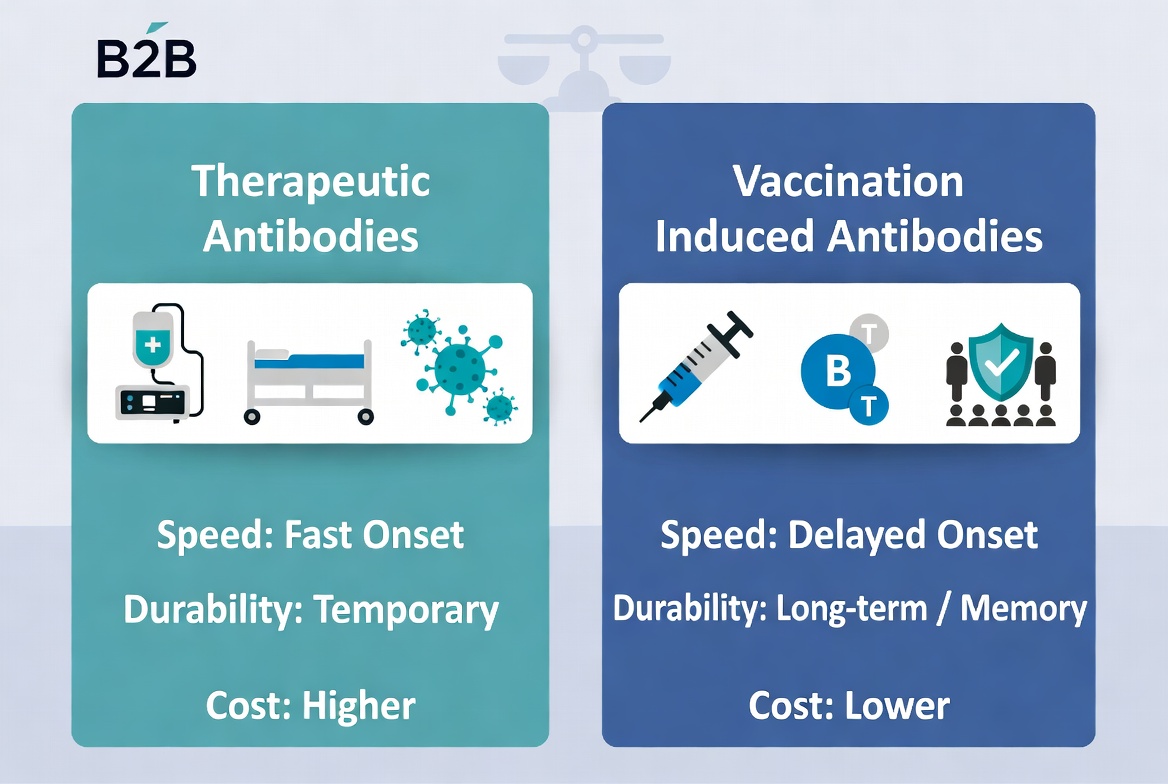
● Practical considerations: speed, durability, and cost
● Inside a custom antibody development and engineering workflow
● Strategic considerations for researchers and biotech leaders
● How Gene Universal supports both therapeutic and vaccine pipelines
● Actionable steps for your next antibody project
● Call to action: partner with Gene Universal for smarter antibody strategies
● Frequently asked questions (FAQ)
● References
Most people assume vaccines and antibody drugs are competing technologies. They're not. Here's why you might need both — and how the line between them is blurring.Therapeutic antibodies and antibodies induced by vaccination are complementary tools for preventing and treating disease, but they differ profoundly in how they are generated, how long they last, and how they are used in the clinic. For researchers and developers, especially those leveraging custom antibody development and engineering, understanding these differences is critical to designing smarter translational strategies and partnering with the right service providers such as Gene Universal. [vumc]
Therapeutic antibodies vs antibodies from vaccination: why the distinction matters
Therapeutic antibodies are engineered or selected antibody molecules administered as drugs to prevent or treat disease, typically providing immediate but temporary protection or disease modification. In contrast, antibodies from vaccination are generated endogenously by the immune system after exposure to a vaccine, establishing long‑lasting immune memory that can protect against future infections.
From a translational pipeline perspective, therapeutic antibodies sit at the intersection of biologics R&D, custom antibody engineering, and regulatory‑grade manufacturing, whereas vaccine‑induced antibodies emerge from active immunization strategies optimized in preclinical and clinical immunology programs. As a global provider of end‑to‑end solutions from DNA/RNA through protein and antibody, Gene Universal operates across both domains by enabling discovery, optimization, and characterization of antibodies that can feed therapeutic or vaccine pipelines. [geneuniversal]
Core definitions and immunology basics
Therapeutic antibodies
Therapeutic antibodies are usually monoclonal or recombinant antibodies produced in cell factories (for example, CHO or HEK293 systems) and administered intravenously or subcutaneously as biologic drugs. They often target specific antigens such as viral proteins, tumor markers, cytokines, or cell receptors to neutralize pathogens, modulate signaling pathways, or recruit immune effector functions. [cloud.tencent]
Antibodies from vaccination
Antibodies generated by vaccination arise when a vaccine antigen (inactivated pathogen, protein subunit, mRNA, or viral vector) stimulates B cells to differentiate into plasma cells and memory B cells. This process creates an adaptive immune response that provides protection on subsequent exposure to the real pathogen, often lasting years or even a lifetime. [vumc]
Mechanisms of action: passive vs active immunity
Passive immunity with therapeutic antibodies
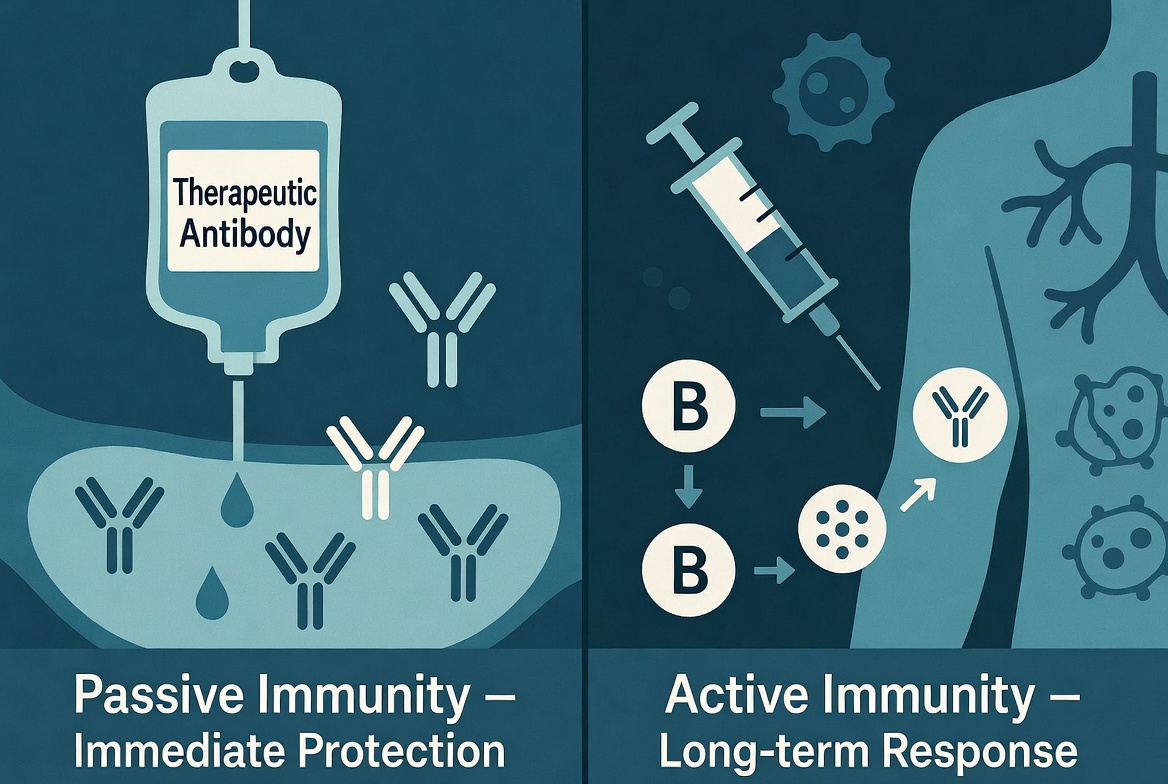
Therapeutic antibodies provide passive immunity because the patient receives ready‑made antibodies that immediately bind their targets. This is particularly useful for:
- Treating ongoing infections where rapid neutralization is needed
- Protecting immunocompromised patients who cannot respond adequately to vaccines
- Offering temporary prophylaxis during outbreaks or high‑risk exposures
However, once the administered antibodies are cleared (often within weeks to a few months), protection wanes, unless dosing is repeated or half‑life‑extended formats are used.
Active immunity with vaccines
Vaccines induce active immunity by teaching the immune system to recognize antigens and mount a robust secondary response on re‑exposure. Key features include: [vumc]
- Development of immunological memory (memory B and T cells)
- Long‑term protection without continuous drug administration
- Population‑level benefits such as herd immunity [vumc]
The main limitation is that most preventive vaccines generally cannot treat patients who are already severely ill; they are primarily preventive.[vumc]
Clinical use cases: when each strategy shines
From a clinician's standpoint, therapeutic antibodies and vaccine‑induced antibodies are tools for different moments in the patient journey.
Therapeutic antibodies are preferred when:
- A patient is already infected and needs rapid viral neutralization or immune modulation
- The patient is immunocompromised or cannot respond well to vaccines
- A highly targeted intervention is required, such as blocking a specific cytokine in autoimmune disease or a receptor on cancer cells
Vaccine‑induced antibodies are preferred when:
- The goal is long‑term protection in healthy or at‑risk populations
- Public health programs aim to reduce transmission and disease incidence at scale
- Cost and logistics favor single or limited dosing for durable immunity [vumc]
Custom antibody development and engineering services, such as those offered by Gene Universal, increasingly support both sides: building therapeutic candidates and generating reagents to evaluate vaccine‑induced responses in preclinical and clinical settings. [geneuniversal]
Key differences at a glance
Practical differences between therapeutic and vaccine‑induced antibodies
| Dimension | Therapeutic antibodies | Antibodies from vaccination |
|---|---|---|
| Generation | Produced ex vivo in cells, purified, formulated as drugs vumc | Produced in vivo by patient's B cells after vaccination vumc |
| Type of immunity | Passive immunity, immediate but temporary vumc | Active immunity, slower onset but long‑lasting vumc |
| Primary purpose | Treatment or short‑term prophylaxis who | Long‑term prevention and immune memory vumc |
| Dosing pattern | Repeated infusions or injections, controlled schedule who | One or a few doses plus boosters as needed vumc |
| Typical format | Monoclonal, recombinant, engineered variants who | Polyclonal mixture driven by natural immune response vumc |
| Ideal patients | Infected, high‑risk, or immunocompromised individuals who | Broad healthy or at‑risk populations vumc |
| Development dependencies | Custom antibody discovery, engineering, cell line dev. | Antigen design, adjuvant selection, immunogenicity profiling vumc |
Industry expert view: where custom antibody development fits
From an industry perspective, the boundary between therapeutic antibodies and vaccine‑induced antibodies is blurring as monoclonal antibodies are increasingly used for both prophylaxis and therapy, while advanced vaccine platforms rely on well‑characterized antigens and reference antibodies. The global custom antibody market is projected to grow at a compound annual growth rate around 9–10 percent, driven by rising R&D intensity, targeted therapies, and precision diagnostics. [kingsresearch]
As a provider headquartered in the United States and serving over 100 countries, Gene Universal positions custom antibody development and engineering as a backbone capability for translational programs. By integrating antigen design, antibody discovery, humanization, and downstream engineering, Gene Universal helps clients bridge early discovery and clinical‑grade candidates more efficiently. [geneuniversal]
Case example: passive vs active strategies in infectious disease
Consider emerging or re‑emerging infectious diseases where both antibodies and vaccines are in play. For some pathogens, effective vaccines may be absent or difficult to develop, while monoclonal antibodies can still provide targeted prophylaxis or therapy. [vumc]
In these contexts:
- Monoclonal antibodies can be deployed rapidly during outbreaks, especially if manufacturing platforms are already established.
- Vaccines remain the long‑term goal for durable population‑level protection but require longer development timelines and large‑scale trials. [vumc]
Custom antibody engineering enables half‑life extension, Fc optimization, and bispecific formats, which can enhance the value proposition of therapeutic antibodies in infectious disease and oncology. Through its engineering services, Gene Universal supports such advanced formats, enabling clients to tailor pharmacokinetics, effector functions, and developability. [cloud.tencent]
Practical considerations: speed, durability, and cost
From a decision‑maker's viewpoint—whether in pharma, biotech, or academia—three dimensions are particularly important: speed, durability, and cost. [meditechinsights]
1. Speed to protection
- Therapeutic antibodies provide immediate protection after administration, which is critical for acutely ill or highly exposed individuals.
- Vaccines require time for the immune system to build up antibodies and memory, typically days to weeks. [vumc]
2. Durability of response
- Passive antibody protection diminishes as the molecules are cleared; newer engineering strategies can extend half‑life but not indefinitely.
-Vaccine-induced antibodies and memory responses can last months, years to whole life, and often respond quickly upon re-exposure. [vumc]
3. Cost and scalability
- Monoclonal antibody therapies often involve complex manufacturing and higher per‑patient costs. [meditechinsights]
- Vaccines, once developed and scaled, can provide broad coverage at lower cost per individual, especially in public health programs. [meditechinsights]
Custom antibody development partners like Gene Universal can help optimize expression systems, purification processes, and analytical workflows to mitigate costs and improve scalability for therapeutic antibody programs. [geneuniversal]
Inside a custom antibody development and engineering workflow
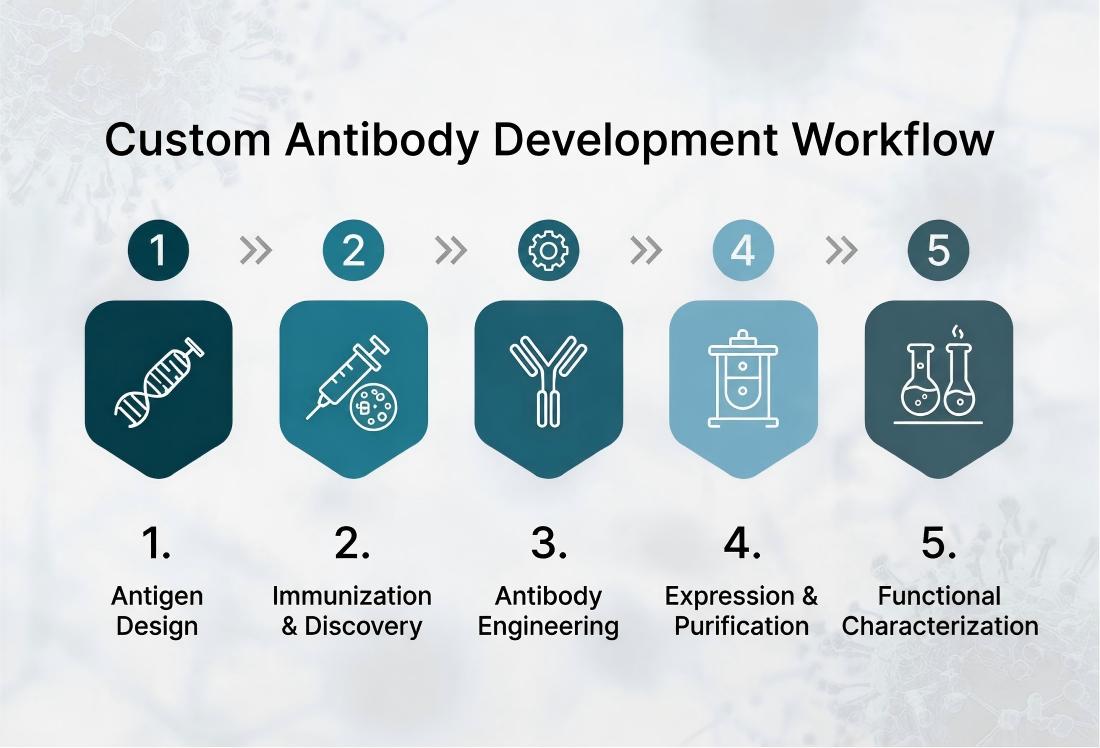
To fully leverage both therapeutic and vaccine‑related applications, many organizations invest in bespoke antibody generation pipelines. A typical custom antibody development and engineering workflow includes: [cloud.tencent]
1. Antigen design and preparation
- In silico epitope prediction, antigen design (peptides, recombinant proteins, or cell‑based antigens)
- Expression and purification of antigens optimized for immunogenicity and structural integrity [geneuniversal]
2. Immunization and discovery
- Immunization of animals or use of display technologies (phage, yeast, or mammalian display)
- Screening for high‑affinity, high‑specificity binders using ELISA, flow cytometry, and other assays [cloud.tencent]
3. Engineering and optimization
- Humanization, affinity maturation, Fc engineering, and format changes (Fab, scFv, bispecifics) [geneuniversal]
- Optimization for stability, manufacturability, and reduced immunogenicity
4. Expression, purification, and characterization
- Stable cell line development, transient expression in HEK293 or CHO, followed by Protein A/G purification [cloud.tencent]
- Functional assays (neutralization, ADCC/CDC, epitope binning) and developability assessment [geneuniversal]
Gene Universal's end‑to‑end platform integrates these steps, enabling clients to progress from DNA sequence to characterized antibody more quickly and with stronger data packages suitable for therapeutic or vaccine‑supporting applications. [geneuniversal]
Strategic considerations for researchers and biotech leaders
As someone deeply engaged in translational research or product development, choosing between therapeutic antibody strategies and vaccine programs—or combining both—requires a portfolio mindset. [meditechinsights]
Key strategic questions include:
- Is the primary aim treatment, prevention, or both?
- What is the target population, and how prevalent are immunocompromising conditions?
- How urgent is the need for protection, and what timelines are acceptable?
- What regulatory and manufacturing pathways are most feasible for your organization?
Custom antibody development and engineering offers flexibility: you can prototype multiple antibody formats, generate reference reagents for vaccine assays, and rapidly iterate based on preclinical and clinical feedback. For organizations working with partners like Gene Universal, this translates into shorter cycles, richer datasets, and reduced technical risk across both therapeutic antibody and vaccine‑related programs. [geneuniversal]
How Gene Universal supports both therapeutic and vaccine pipelines
As a global life science service provider headquartered in the United States, Gene Universal supports customers across more than 100 countries with solutions spanning DNA/RNA to protein and antibody. For teams comparing therapeutic antibodies to vaccine‑induced antibodies, this integrated capability is particularly valuable. [geneuniversal]
Gene Universal's Custom Antibody Development and Engineering services include:
- Tailored antigen design and immunization strategies for complex targets [geneuniversal]
- Discovery and optimization of monoclonal and recombinant antibodies suited for therapeutic applications [geneuniversal]
- Engineering services such as humanization, affinity maturation, and Fc modification for improved in vivo performance [geneuniversal]
- Production and purification workflows that generate high‑affinity, high‑specificity antibodies ready for preclinical or early development studies [geneuniversal]
By combining these services with its broader molecular biology portfolio, Gene Universal enables customers to build cohesive pipelines connecting early discovery, functional screening, and downstream development of therapeutic antibodies or vaccine candidates. [geneuniversal]
Actionable steps for your next antibody project
If you are planning or optimizing a project involving therapeutic antibodies or vaccine‑induced antibodies, consider the following practical steps:
1. Clarify your primary objective
Decide whether your program is oriented toward treatment, prevention, or a hybrid approach that uses both therapeutic antibodies and vaccines.
2. Map out your antibody needs
Identify what types of antibodies you require: lead candidate therapeutics, reference standards for immunoassays, or exploratory tools for mechanism‑of‑action studies.
3. Select the right development partner
Evaluate service providers on their ability to deliver end‑to‑end solutions, including custom antibody development, engineering, and robust analytical characterization. [meditechinsights]
4. Design for scalability and regulatory readiness
Ensure early design choices (isotype, format, expression system) support downstream manufacturing and regulatory pathways.
5. Leverage integrated platforms
By working with organizations like Gene Universal that span from genetic construct design to antibody engineering, you can reduce hand‑offs and accelerate time to key milestones. [geneuniversal]
Call to action: partner with Gene Universal for smarter antibody strategies
If your team is evaluating therapeutic antibody programs, vaccine‑supporting assays, or dual strategies, partnering with a custom antibody development and engineering provider can significantly de‑risk your roadmap. With a global footprint, integrated platforms, and a strong focus on efficiency and quality, Gene Universal is well‑positioned to help you design, develop, and optimize antibodies tailored to your specific application. [geneuniversal]
Whether you are at the concept stage or preparing to advance a candidate, you can reach out to Gene Universal to discuss your targets, timelines, and technical challenges—and explore how an end‑to‑end solution from DNA/RNA to antibody can accelerate your next discovery. [geneuniversal]
Frequently asked questions (FAQ)
1. Are therapeutic antibodies and vaccine‑induced antibodies ever used together in one patient journey?
Yes. A patient might receive therapeutic antibodies during acute illness or high‑risk exposure and later be vaccinated to gain long‑term active immunity, ensuring both immediate and durable protection.
2. How do custom antibody services support vaccine development?
Custom antibodies are widely used as reference standards in neutralization assays, ELISA tests, and mechanistic studies, helping vaccine developers quantify immune responses and refine antigen designs. [cloud.tencent]
3. What makes a monoclonal antibody suitable for therapeutic use?
Key attributes include high specificity and affinity for the target, favorable pharmacokinetics, manufacturability in scalable systems, and an acceptable safety and immunogenicity profile. [cloud.tencent]
4. Can therapeutic antibodies replace vaccines in public health programs?
In most scenarios, therapeutic antibodies complement rather than replace vaccines because they are more expensive per patient and provide shorter‑term protection, whereas vaccines support broad, durable population‑level immunity. [meditechinsights]
5. Why partner with a global provider like Gene Universal for antibody development?
Global providers offer integrated capabilities, experience across diverse targets and formats, and streamlined workflows from genetic design through engineering and production, which can shorten timelines and improve overall project success. [geneuniversal]
References
1. Vanderbilt University Medical Center. "Antibody Therapy vs. Vaccine."
<https://www.vumc.org/viiii/infographics/antibody-therapy-vs-vaccine> [vumc]
2. World Health Organization. "Monoclonal antibodies for passive immunization of infectious diseases."
<https://www.who.int/teams/immunization-vaccines-and-biologicals/product-and-delivery-research/monoclonal-antibodies-(mabs)-for-infectious-diseases>
3. Kings Research. "Custom Antibody Market Report 2032."
<https://www.kingsresearch.com/custom-antibody-market-2123> [kingsresearch]
4. Meditech Insights. "Custom Antibody Market Size, Share & Growth Forecast 2025–2030."
<https://meditechinsights.com/custom-antibody-market/> [meditechinsights]
5. Twist Bioscience. "Therapeutic Antibodies vs. Antibodies from Vaccination."
<https://twistbioscience.com/blog/science/therapeutic-antibodies-vs-antibodies-vaccination> [twistbioscience]
6. Tencent Cloud Developer.
<https://cloud.tencent.com/developer/article/2544991> [cloud.tencent]
7. Gene Universal. "Company Profile."
<https://www.geneuniversal.com/company/profile?id=3> [geneuniversal]
8. Gene Universal. "Custom Antibody Development and Engineering."
<https://www.geneuniversal.com/service/custom-antibody-development-and-engineering?id=104> [geneuniversal]